The Currency of Connection
Every Tuesday night at The Wheatsheaf in Oxford, something magical happens that no A&R manual could ever capture. Between the sticky floors and the dodgy PA system, unsigned acts trade more than just setlists – they're exchanging the invisible currency that actually drives Britain's live music scene.
"It's not what you know, it's who knows someone who knows someone," laughs Sarah Chen, whose journey from acoustic nights in Camden to supporting headliners at Green Man Festival took five years and countless conversations over post-gig pints. "The music industry pretends it's all about talent and timing, but really it's about being sound to work with and remembering people's names."
This is the truth that music colleges don't teach and industry handbooks skip over entirely. Britain's live music ecosystem runs on a complex web of relationships, mutual favours, and unwritten protocols that can make or break an artist's trajectory from their first open mic to festival glory.
Stage One: The Art of Being Seen
Jamie Morrison discovered this the hard way. After months of playing to empty rooms in Manchester's Northern Quarter, he realised that showing up was only half the battle. "I was so focused on my performance that I'd pack up and leave straight after my set," he recalls. "Then this old-timer pulled me aside and said, 'You're missing the real gig, mate – it happens after the music stops.'"
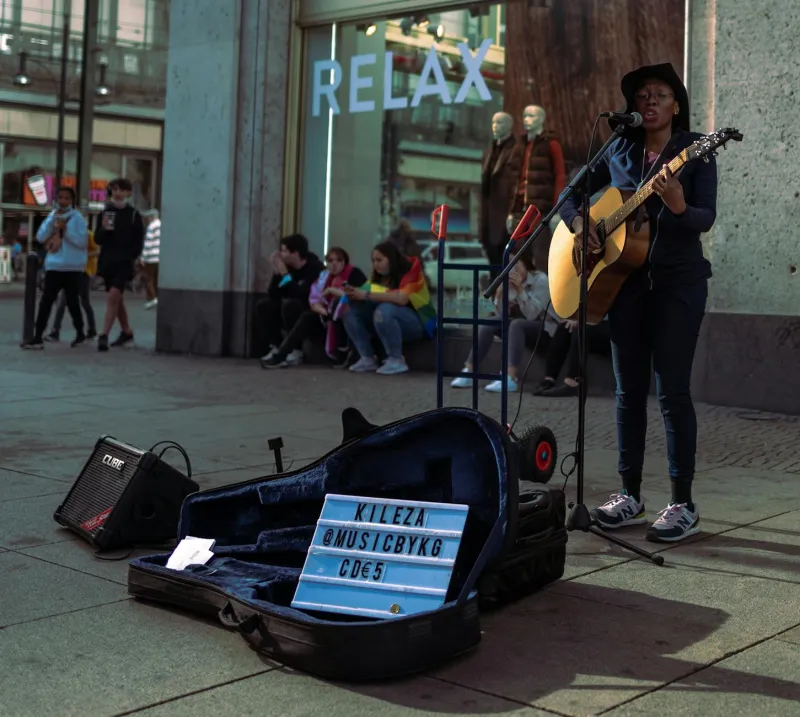
The real education begins in those post-performance moments. Watch any successful busker in Covent Garden or Edinburgh's Royal Mile, and you'll notice they're not just collecting coins – they're building a network. The venue owner who stops to listen, the photographer documenting street performers, the festival scout grabbing lunch nearby – these chance encounters fuel the entire system.
Lorna Davies, who runs booking for several grassroots venues across Wales, puts it bluntly: "I book acts I trust won't let me down. That means people who turn up on time, don't trash the green room, and understand that tonight's support slot could be next month's headline opportunity."
The Venue Circuit: Your Extended Family
Britain's grassroots venues operate like an extended family network, complete with all the dynamics that entails. The Joiners Arms in Southampton talks to The Bodega in Nottingham, which has connections to King Tut's in Glasgow. Impress at one, and word travels faster than any press release.
"Venues share information constantly," explains Tom Richards, who books acts for a chain of independent venues across the Midlands. "If someone's a nightmare to work with, we all know within a week. But if they're brilliant – genuinely connect with audiences, shift tickets, bring their own crowd – then suddenly they're getting offers from places they've never even heard of."
This network extends beyond just venues. Sound engineers, roadies, photographers, and even merchandise sellers all carry influence within the ecosystem. Treat them well, and they become unofficial ambassadors for your music.
Festival Fever: The Long Game
"Everyone thinks festivals are about that one perfect demo reaching the right ears," says festival programmer Alex Thompson, who's worked with events from Latitude to End of the Road. "But actually, it's about demonstrating you can handle the journey. We're not just booking a band – we're betting on their ability to deliver under pressure, connect with new audiences, and represent the festival's values."
The pathway to festival stages often follows predictable patterns that savvy artists learn to navigate. Local festivals scout regional venues. Regional festivals feed into national circuits. National festivals provide the stepping stones to international opportunities. But each level requires proof of concept that goes beyond musical ability.
"We look at social media engagement, ticket sales data, how they interact with other artists," Thompson continues. "A band that sells out a 200-capacity venue and has their audience singing every word is infinitely more valuable than someone who plays perfectly to a half-empty room."
The New Rules for a New Era
The landscape has evolved dramatically in recent years, particularly post-pandemic. Digital platforms have democratised discovery, but they've also intensified competition. Smart artists are adapting by understanding that online presence and offline networking must work in tandem.
"TikTok might get you noticed, but it won't get you rebooked," observes Manchester-based agent Rebecca Walsh, who represents several acts currently climbing the festival circuit. "The fundamentals haven't changed – be professional, be memorable, and understand that every gig is an audition for the next one."
The most successful artists she works with treat every performance as part of a larger conversation with the industry. They research who's in the audience, engage with local media, and maintain relationships long after the final encore.
Building Your Invisible CV
Perhaps most importantly, Britain's live music ladder rewards consistency over spectacular one-offs. The acts that progress understand they're building an invisible CV that speaks louder than any press kit.
"Your reputation precedes you everywhere in this industry," reflects Sarah Chen, now preparing for her third festival season as a main stage act. "Every cancelled gig, every time you're difficult to work with, every audience you fail to connect with – it all adds up. But so does every favour you do, every crowd you win over, and every relationship you nurture."
The View from Here
As we look towards the future of Britain's live music scene, the fundamentals remain remarkably consistent. Technology may change how we discover music, but the human connections that drive career progression remain as crucial as ever. The artists who understand this – who see every busking pitch as a potential audition and every venue as a relationship to nurture – are the ones who'll be headlining tomorrow's festivals.
The ladder exists, but it's built from handshakes, not hashtags. And for those willing to learn its unwritten rules, the view from the top is worth every step of the climb.