When Access Becomes Art
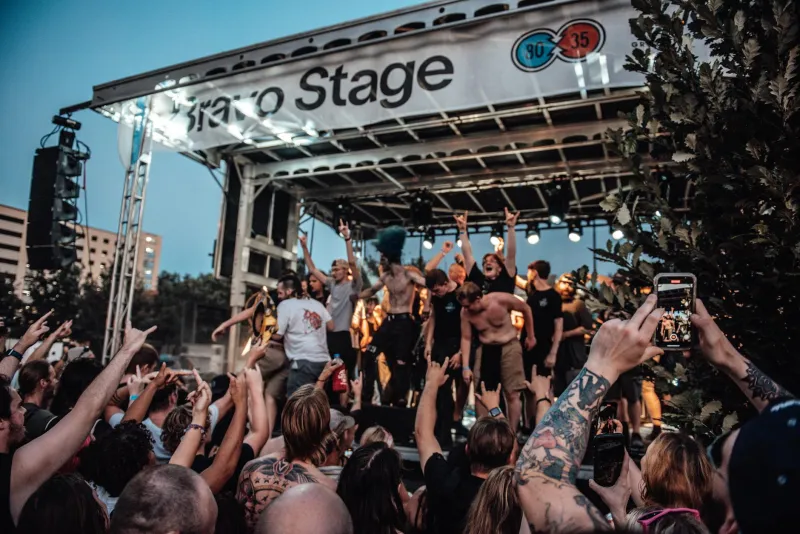
Amber Galloway Gallego doesn't just interpret music – she becomes it. Watch her translate a thunderous drum solo into British Sign Language at Reading Festival, and you'll witness something extraordinary: accessibility transformed into artform, inclusion elevated to performance art. Her hands carve rhythms from thin air while her entire body channels the music's emotional landscape, creating a visual symphony that captivates hearing and Deaf audiences alike.
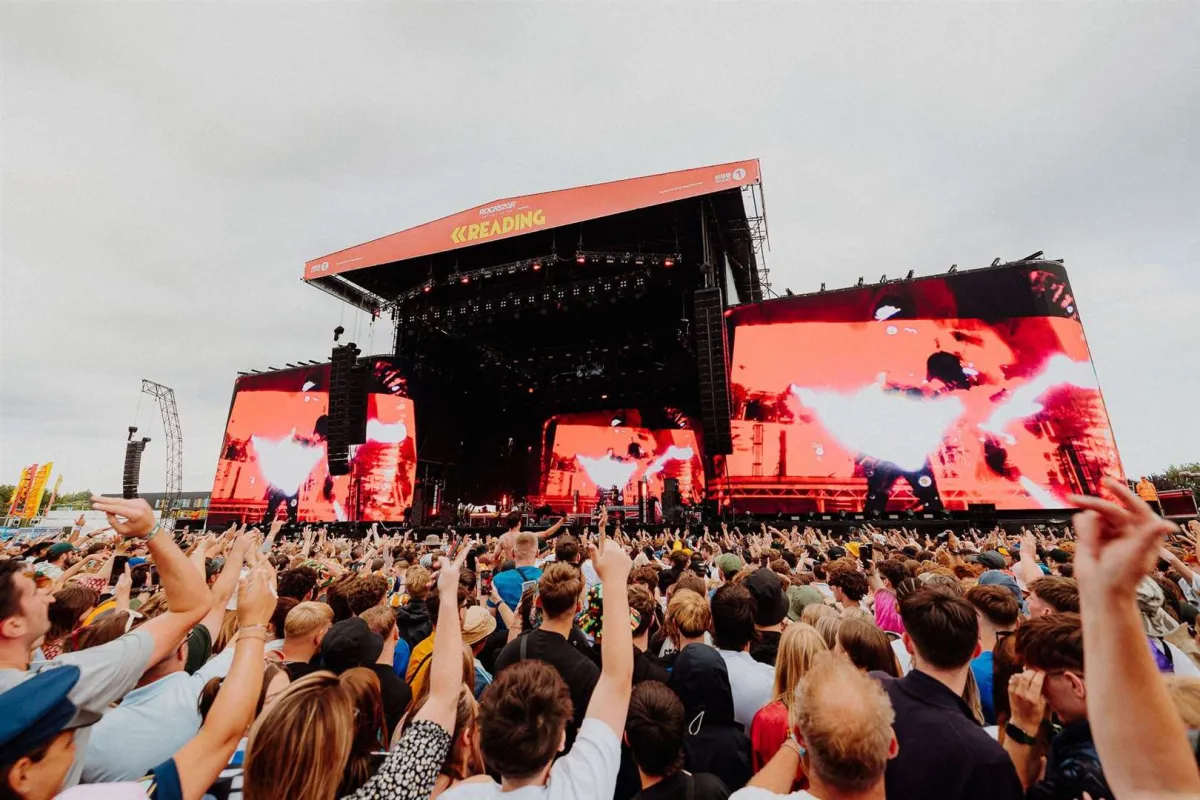 Photo: Reading Festival, via www.newburytoday.co.uk
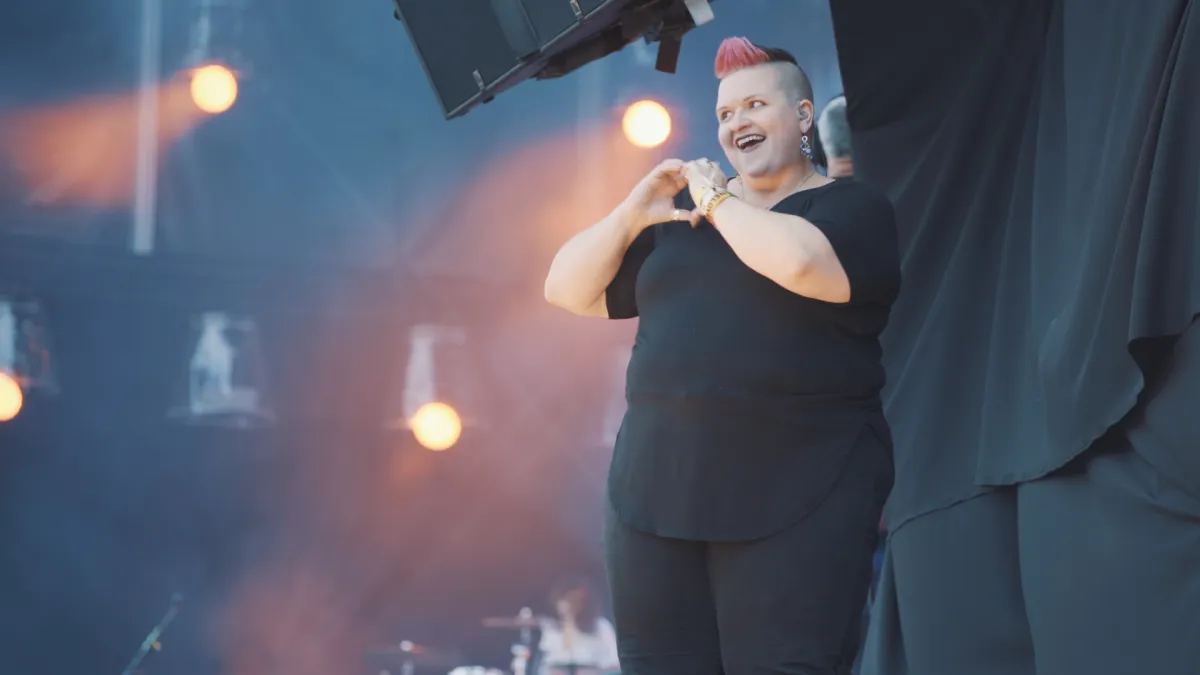 Photo: Amber Galloway Gallego, via www.adhugger.net
"People stop and stare, and that's exactly what we want," Amber explains, fresh from her set interpreting Arctic Monkeys. "When BSL interpretation becomes a spectacle in its own right, we know we're doing something right. We're not just making music accessible – we're making it more beautiful."
This is the quiet revolution happening on Britain's festival stages. What began as compliance-driven box-ticking has evolved into something far more profound: a reimagining of live music experience that enhances the magic for everyone involved.
Beyond the Bubble
For too long, festival accessibility meant relegating Deaf and hard-of-hearing attendees to designated areas, often with restricted views and limited interpreter coverage. The message was clear: you can attend, but your experience will be different, lesser, separate.
That paradigm is crumbling, and festivals like Latitude, Green Man, and Shambala are leading the charge. These events now position BSL interpreters prominently on main stages, ensuring they're visible to the entire crowd rather than hidden away in accessibility ghettos.
"The shift has been remarkable," says Rachel Mapson, accessibility coordinator for several major UK festivals. "Five years ago, we'd have one interpreter tucked away in a corner. Now we're booking teams of specialists, each trained in different musical genres, positioned where everyone can see them. It's become part of the show."
This visibility matters immensely. When hearing festivalgoers witness skilled BSL interpretation, they often find their own relationship with the music transformed. The visual element adds layers of meaning, making lyrics more impactful and rhythms more tangible.
The Specialists
Behind this transformation stands a dedicated community of interpreters who've specialised in musical interpretation – a field requiring entirely different skills from conference or medical interpreting. These performers study artists' catalogues, learn song structures, and develop signature styles for translating everything from folk ballads to death metal.
Sarah Battersby has interpreted at over fifty UK festivals, developing particular expertise in indie and electronic music. "Each genre requires different techniques," she explains. "Folk music lets you focus on storytelling and lyrical poetry. Electronic music becomes about texture, energy, and spatial relationships. Hip-hop demands rapid-fire precision and urban cultural fluency."
The preparation is intensive. Interpreters spend weeks before festivals studying setlists, watching performance videos, and collaborating with Deaf community members to develop signs for new slang, band names, and cultural references. They're not just translating language – they're translating entire cultural experiences.
Community Champions
The real measure of success comes from the Deaf festival community itself. Long-time festivalgoer Marcus Thompson, who's been attending UK events since the late '90s, describes the transformation: "Early on, I'd spend most of my time reading lips and guessing at lyrics. The music was there, but half the experience was missing. Now, watching a skilled interpreter work, I'm getting emotional nuances I never caught before. They're not just showing me what's being said – they're showing me how it feels."
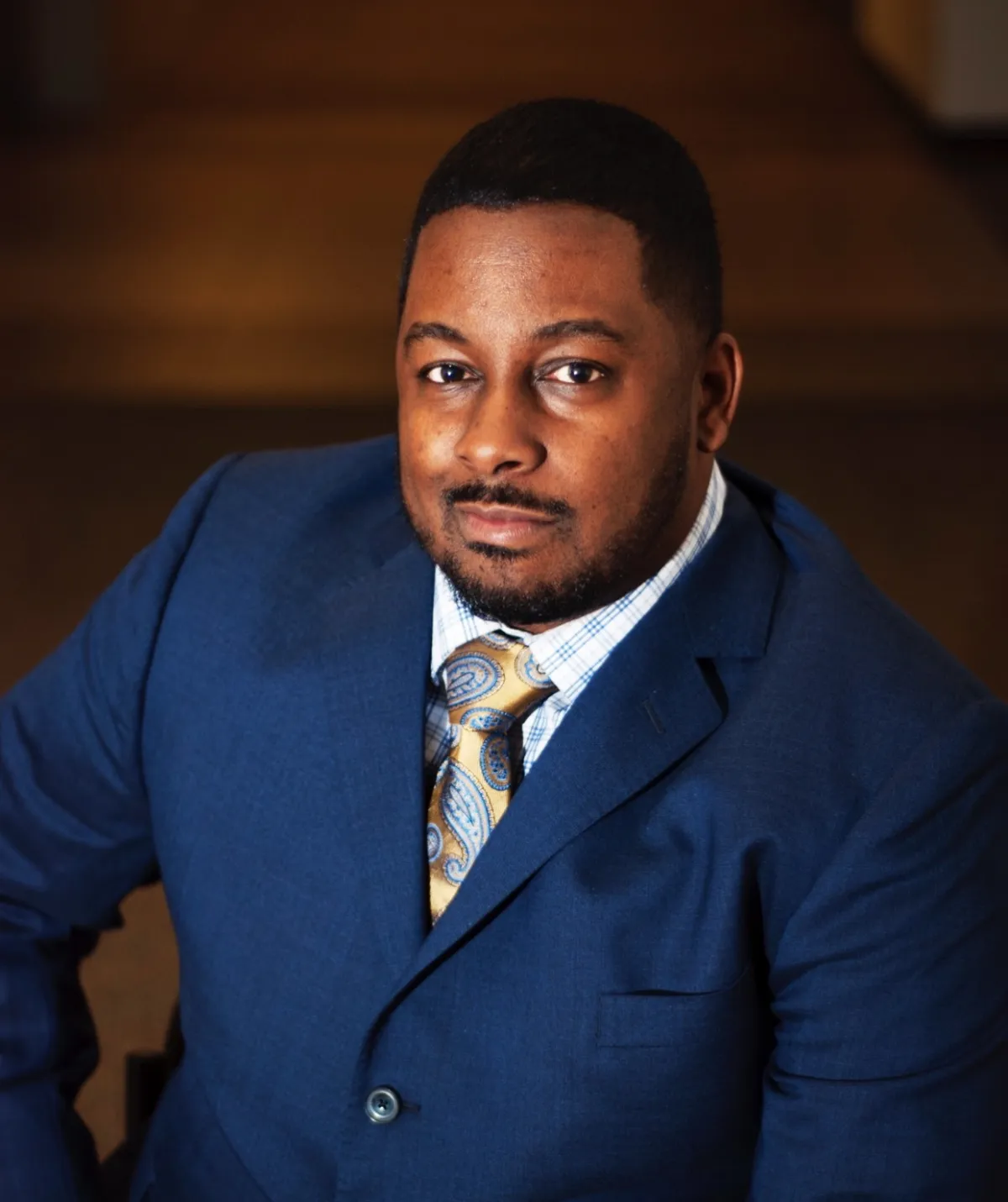 Photo: Marcus Thompson, via m.media-amazon.com
This emotional connection has created unexpected community bonds. Deaf festivalgoers often follow particular interpreters across different events, developing fan relationships that mirror those between audiences and musicians. Social media buzzes with clips of particularly inspired interpretation moments, creating viral celebrations of accessibility excellence.
Young Deaf festivalgoers especially benefit from seeing BSL interpretation elevated to performance status. "Representation matters," notes Dr. Emma Johnson, a Deaf studies researcher at University College London. "When kids see interpreters commanding main stage attention, getting applause, being celebrated as artists, it changes their entire relationship with their own language and culture."
The Technology Bridge
Innovative festivals are pushing boundaries further with technology integration. Several events now offer smartphone apps providing real-time BSL interpretation via augmented reality, allowing users to point their devices at any stage and access interpretation instantly.
Boomtown Festival has experimented with smart glasses that overlay BSL interpretation directly onto users' vision, creating seamless integration between accessibility and experience. These technological advances aren't replacing human interpreters but expanding their reach and impact.
"Technology amplifies what we do," explains tech-savvy interpreter David Mills. "But the human element remains crucial. Music is emotional communication, and that requires human intuition, cultural understanding, and artistic interpretation that no algorithm can replicate."
Changing the Conversation
Perhaps most importantly, this BSL revolution is reshaping broader conversations about inclusion and community in British festival culture. When accessibility becomes art, when inclusion becomes celebration, the entire festival experience improves for everyone.
"We're proving that true accessibility isn't about accommodating difference – it's about celebrating it," reflects Amber Galloway Gallego. "When festivals embrace BSL interpretation as performance art, they're not just serving the Deaf community. They're enriching the entire cultural experience."
From Now On
The future looks bright for BSL interpretation in British festival culture. More events are budgeting for specialist teams, more interpreters are developing musical expertise, and more Deaf festivalgoers are experiencing live music with unprecedented richness and inclusion.
This silent revolution is teaching Britain's festival community a crucial lesson: when we design for inclusion from the ground up, when we celebrate difference rather than merely tolerate it, everyone benefits. The interpreters who once stood in shadows are now commanding spotlights, proving that accessibility and artistry aren't just compatible – they're inseparable.
From now on, the question isn't whether festivals can afford to provide excellent BSL interpretation. It's whether they can afford not to embrace this beautiful fusion of access and art that's making British festival culture more inclusive, more innovative, and more inspiring for everyone involved.