Dressed for the Future: How Festival Outfits Became Britain's Most Honest Mirror
The Outfit Is the Message
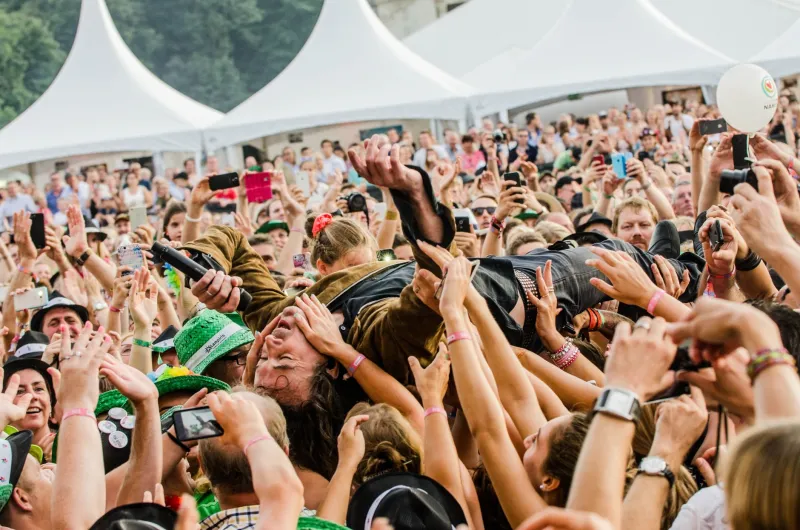
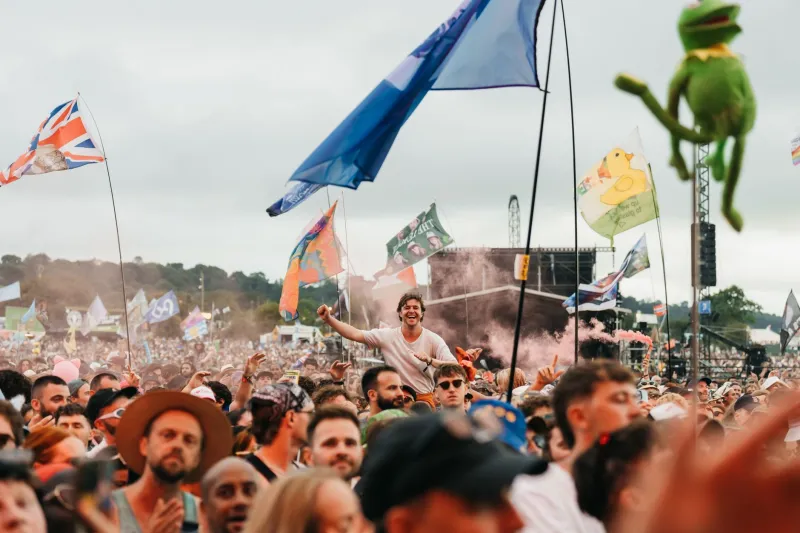
There's a moment, usually around Thursday afternoon on a festival site, when you stop looking at the stage and start looking at the crowd. Not because the music isn't worth watching, but because the sheer visual spectacle of 60,000 people who've decided, for a few days, to dress exactly as they please is genuinely arresting. Festival fashion has always been its own kind of performance. What's changed is what that performance is trying to say.
For a long time, the visual language of British festivals was relatively codified. Wellies — ideally Hunter, ideally in a muted colour. A flower crown, or at a minimum a flower crown considered and rejected. Denim cut-offs. A band tee from a previous year's lineup, worn with the specific confidence of someone proving they were there first. It was a uniform that communicated belonging, ease, a certain studied nonchalance. It worked. It was fun. It also, for many people, stopped reflecting who they actually were.
The shift that's happened over the last five or six years isn't just aesthetic. It's ideological, in the most everyday, un-pompous sense of that word. What people choose to put on their bodies at a festival — and crucially, where they sourced it, how they made it, and what it signals to the people around them — has become one of the more honest expressions of the values driving a generation.
The Sustainability Pivot
Ask anyone under 30 about their festival wardrobe and the word 'charity shop' comes up within about thirty seconds. Not as a fallback option, but as the first and preferred choice. The Depop generation has made pre-loved clothing not just acceptable but actively desirable, and nowhere is that more visible than at a festival, where standing out matters and the provenance of your outfit is increasingly part of its appeal.
'I haven't bought anything new to wear to a festival in probably four years,' says Priya, 24, who attends three or four events a year across the UK. 'Part of it is cost, genuinely — festivals are expensive enough without a new outfit on top. But it's also that I feel better in something with a history. It's more interesting. I found this incredible 1970s cheesecloth top in an Oxfam in Leeds and I've worn it to every festival since.'
That sentiment is being reflected in how festival fashion is being designed and marketed at the higher end, too. Independent British designers with a festival following — many of them operating out of Brighton, Bristol, and East London — have made sustainability central to their brand identity in ways that feel genuine rather than performative. Small-batch production, natural dyes, deadstock fabrics, repair workshops at their own festival stalls. The business model has changed because the customer has.
Large retailers haven't entirely caught up, though several have tried. The fast fashion 'festival edit' — a seasonal drop of glittery, disposable pieces pitched at the Coachella-adjacent aesthetic — still exists, and still sells. But it sits increasingly awkwardly alongside a festival culture that is visibly moving away from the throwaway.
Identity, Visibility, and the Space to Be Seen
Festivals have long functioned as spaces where people feel freer to dress in ways they might not manage in their daily lives. What's shifted is the nature of what that freedom is being used to express.
For LGBTQ+ festival-goers, particularly younger ones, the festival outfit has become a site of visibility and pride in a very direct sense. Rainbow flags worn as capes. Pronoun badges alongside festival wristbands. Outfits that would attract comments on a high street worn with complete ease in a crowd that's actively celebrating difference. 'It's the one place I dress the way I actually want to,' says Jamie, 21, who identifies as non-binary and attends festivals partly for this reason. 'Not a costume. Just me.'
There's a parallel trend in the way heritage and cultural identity are being expressed through festival clothing. British South Asian festival-goers are increasingly blending traditional textiles and silhouettes with contemporary festival aesthetics — dupattas worn as sarongs, embroidered kurtas layered over denim, henna that references both family tradition and personal style. It's fashion as cultural conversation, and it's far more interesting than anything a trend forecaster could have scripted.
Political messaging has also found its way onto festival bodies more explicitly than before. Climate patches on denim jackets. Badges supporting specific causes. T-shirts that function as small arguments. Some of this is earnest, some of it is aesthetic, and the line between the two is deliberately blurry — which is, arguably, the point.
The Trend Forecasters Are Taking Notes
For those whose job it is to read cultural signals, festival fashion has become an unusually reliable indicator. 'Festivals are a stress test for trends,' explains one London-based trend consultant who works with several UK retailers. 'People have thought about their outfits, they've committed to them, they're wearing them in public in front of tens of thousands of people. There's no accidental dressing at a festival. Everything you see has been chosen.'
What she's been seeing chosen, consistently, over the past few seasons: earth tones over neons, natural fabrics over synthetics, layering for practicality rather than just aesthetics, and an increasing number of outfits that are visibly handmade or customised. 'The DIY element is huge right now. People are embroidering their own jackets, cutting and resewing vintage pieces, making things. That takes time and effort. It's a statement about valuing craft over convenience.'
The wellies, for what it's worth, are still there. Some things endure.
Dressing Forward
What strikes you, looking at the trajectory of British festival fashion over the past decade, is how consistently it has moved in the direction of more — more intention, more individuality, more honesty about what the wearer actually cares about. The old uniform communicated 'I belong here.' The new one tends to communicate something more specific: who I am, what I believe, where this came from, and why it matters.
That's a lot to ask of a cheesecloth top and a pair of secondhand boots. But then, festivals have always been places where we ask more of ourselves than ordinary life tends to require. The outfits are just keeping up.