Same Field, Different Summer: The Artists Who Keep Coming Back
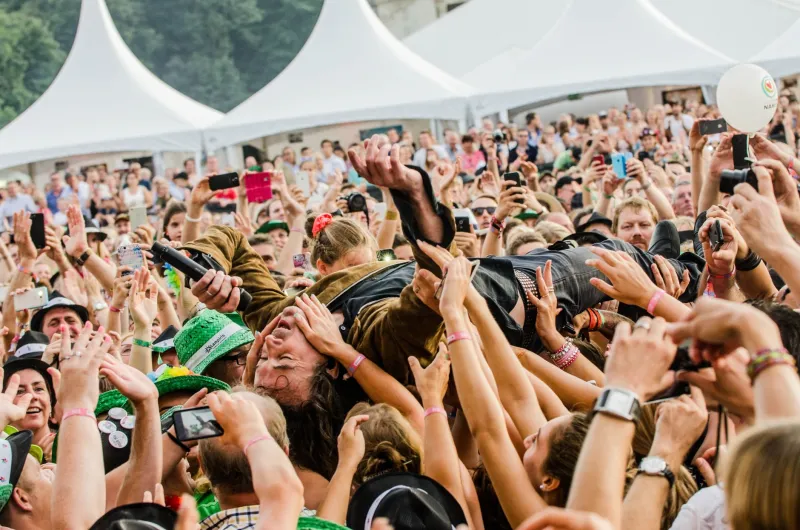
There's a particular kind of recognition that happens in a festival crowd. Not the roar when a headliner walks out under lights — something quieter, warmer. It's the cheer when an artist you half-expected to see ambles onto a smaller stage, guitar already slung, grinning like they never left. Because in a sense, they haven't.
Across the UK's sprawling festival landscape, a curious and largely undocumented phenomenon has been taking shape for years. Certain artists return to certain events so reliably, so ritually, that the relationship stops being a booking and starts being something closer to belonging. They're not headliners. They're not necessarily household names. But ask the regulars, and they'll tell you: summer doesn't feel complete without them.
More Than a Gig Fee
For most musicians, the festival circuit is transactional by design. You pitch, you get booked, you play, you move on. But somewhere in the repetition — the third year on the same acoustic stage, the fifth time sleeping in the same field — something shifts.
Take the folk and roots scene, where this loyalty culture is arguably most visible. Artists who've built careers playing the likes of Shrewsbury Folk Festival, Cambridge Folk Festival, or Sidmouth Folk Week often describe their annual returns in language that sounds less like professional obligation and more like homecoming. The crowd knows their catalogue. The organisers know their rider. The sound engineer already has their settings saved.
"There's a shorthand that develops," one touring musician explained at a panel discussion earlier this year. "By year three or four at the same festival, you stop being a guest. You become part of the furniture — and I mean that in the best possible way."
For festival organisers, these returning figures serve a function that no amount of marketing spend can replicate. They're living continuity. When an audience member brings their teenager to a festival they've attended for a decade, pointing out the artist who played the same set in 2014, that's heritage being made in real time.
The Unofficial Ambassador
Festival programmers are increasingly candid about the value of what some in the industry call "anchor artists" — performers who return often enough to become synonymous with a specific event. These aren't necessarily the names on the poster. They're the ones who appear on fan forums when someone asks "who's worth seeing?", the ones whose presence signals to newcomers that a festival has genuine soul.
The relationship tends to be mutually reinforcing. Artists gain a reliable platform and a crowd that genuinely knows their work — a rarity in an era when most festival audiences are half-listening while queuing for halloumi fries. Festivals gain credibility, continuity, and a readymade sense of identity that newer events spend years trying to manufacture.
Some festivals have leaned into this openly. Green Man in Wales, for instance, has built much of its reputation on a curatorial sensibility that prizes depth over spectacle — and returning artists are central to that. The same names appear across multiple years not through laziness but through intention. It tells you something about what the event values.
What the Audience Builds Around It
Here's the part that often gets overlooked in conversations about festival programming: audiences don't just attend these events, they construct their summers around them. And within that construction, familiar artists play a surprisingly significant role.
For many festivalgoers, the headline acts are almost secondary. The real draw is the accumulated texture of a specific event — the food stalls, the smell of the site, the particular quality of light at 7pm on a Saturday. Returning artists are threaded through all of that. They're part of the sensory memory of a place.
Social media has made this dynamic more visible. Festival Facebook groups and Reddit threads are full of posts asking whether a particular artist is on the bill this year — not because they're famous, but because they've been there before. Their absence is noticed. Their return is celebrated.
One long-time attendee at a Yorkshire roots festival put it plainly: "I've seen the same artist there six times. I don't even buy their albums. But seeing them on that stage every summer is part of what the weekend means to me. It'd feel wrong without them."
The Risk of Repetition
Not everyone is convinced this model serves the music well. Critics of the returning-artist phenomenon argue that it can calcify a festival's identity, shutting out emerging voices in favour of comfortable familiarity. There's a version of loyalty that tips into insularity — where the same faces occupy the same slots year after year, and the programming starts to feel less like curation and more like habit.
There's also the question of what it means for the artists themselves. Does returning to the same festival annually represent creative stagnation, or is it a form of artistic rootedness? The answer probably depends on what they're doing with the slot. An artist who turns up and plays the same set they played three years ago is coasting. One who uses the familiarity of the crowd to take risks — to try new material, to play longer, to invite guests — is doing something genuinely interesting with the relationship.
The best returning artists understand this instinctively. The festival becomes a testing ground, a space where the accumulated trust of the audience gives them room to experiment.
From Now On
What makes the returning-artist culture so resonant, ultimately, is what it says about how we experience music over time. Festivals are one of the few remaining spaces where live music functions as a communal, repeated ritual rather than a one-off event. When an artist comes back summer after summer, they become part of that ritual — a fixed point in a calendar that otherwise keeps changing.
In a cultural landscape obsessed with novelty, there's something quietly radical about valuing return. About saying: this is worth revisiting. This connection is worth maintaining. The field looks the same. The faces are a little older. And the music, somehow, sounds better for it.