Roots, Rhythms, and Revolution: How Diaspora Communities Are Reshaping the British Festival Map
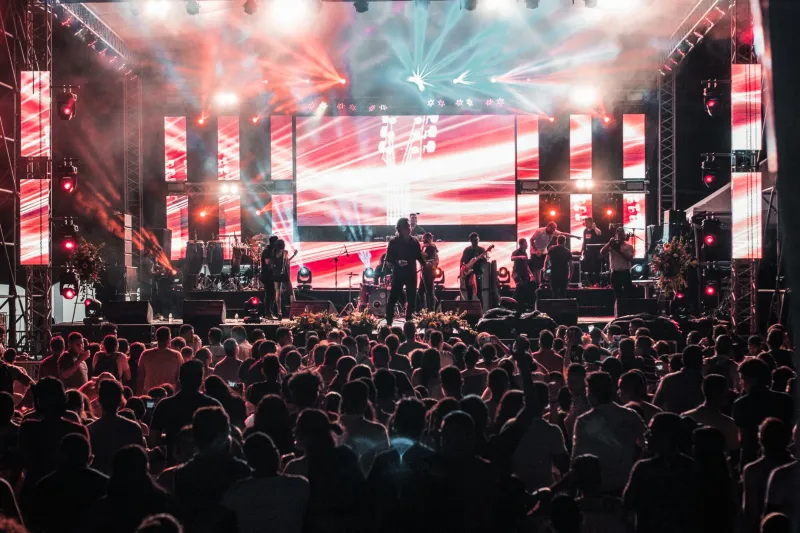
If you want to understand where British festival culture is genuinely heading, you could do a lot worse than spending a Saturday in Peckham in July, or a Sunday afternoon in Leicester's Victoria Park in August, or a warm September weekend in Bradford's Centenary Square. These aren't the places that usually make the glossy magazine festival round-ups. There are no celebrity chef pop-ups or branded wellness retreats. But there is music that stops you mid-stride. Food that tells you exactly where it comes from. And a sense of communal joy so particular and so rooted that it feels like witnessing something that has been earned over generations — because it has.
Britain's diaspora communities have been creating cultural gatherings for decades. What's changing now is the scale, the ambition, and the degree to which the wider culture is finally paying attention.
Building Something from Scratch
Take the growth of British-Nigerian Afrobeats events across London. What began as informal club nights and community dances in the 1990s has evolved into full-scale outdoor festivals, drawing audiences in the tens of thousands and launching artists who now headline European tours. The organisers behind these events — many of them second-generation Nigerians who grew up between two cultures — speak about their work with a particular kind of urgency.
'We weren't waiting for someone to give us a platform,' says one south London promoter who asked not to be named. 'We built the platform. And then we built a bigger one. And now people are queuing round the block.'
The music itself — Afrobeats, Afro-fusion, Amapiano — is no longer niche. It's charting. It's soundtracking adverts and television dramas and, increasingly, the stages of mainstream British festivals. But the community gatherings that nurtured it, that kept it honest and specific and alive, are a different thing entirely. They are not industry showcases. They are celebrations of a living culture.
The Mela Moment
Mela festivals — the South Asian tradition of community gathering, combining music, dance, food, and cultural performance — have been part of British life since the 1970s. But the events happening in Leicester, Bradford, Birmingham, and Southall today are something significantly more expansive than their predecessors.
The Leeds Mela, the Birmingham Mela, the Southall Mela — these are major civic events, pulling in audiences from across the UK and, increasingly, from abroad. They feature everything from classical Bharatanatyam and bhangra to grime, garage, and British-Asian pop artists who blend influences with total fluency. The food, the craft markets, the children's programming — all of it reflects the layered, complicated, gloriously hybrid reality of what it means to be British-South Asian in 2024.
Priya Sharma, who helps organise a mela in the East Midlands, describes the event as 'a mirror and a window at the same time. For our community, it reflects who we are and where we've come from. For everyone else, it's an invitation to look in and understand something real about Britain.'
That dual function — internal celebration and external bridge-building — is something that runs through nearly all of these events. They are emphatically not performing for an outside gaze. But they are, by their nature, generous.
The Next Generation's Inheritance
Speak to young British people from Caribbean, West African, South Asian, East Asian, or Middle Eastern backgrounds about these festivals, and something consistent emerges. They describe them as the events where they don't have to explain themselves. Where the music, the food, and the references are all already understood. Where the crowd looks like their family.
This might sound like a small thing. It isn't. The experience of attending a mainstream British festival as a person of colour — particularly in predominantly white rural settings — can involve a low-level but persistent sense of being a visitor in someone else's cultural space. Diaspora festivals dissolve that entirely.
But here's what's particularly interesting: the audiences at these events are increasingly mixed. The young British-Nigerian festival in Peckham draws white, Asian, and mixed-heritage attendees in significant numbers. The mela in Leicester has a loyal contingent of white British regulars who've been coming for twenty years. Culture, when it's genuinely alive and genuinely offered, tends to attract people beyond its immediate community. That's always been true. It's just more visible now.
What the Mainstream Can Learn
The organisers of these events are, by necessity, some of the most resourceful and entrepreneurially creative people in British live culture. They frequently operate with smaller budgets, less institutional support, and fewer established industry relationships than their counterparts in the mainstream festival world. And yet they deliver events of extraordinary quality and emotional power.
There are lessons here for the wider industry, if it's willing to listen. About programming that reflects the actual diversity of British audiences. About community engagement that goes deeper than a diversity statement. About the value of events that are rooted in something real rather than assembled from trend forecasts.
Britain has always been a country shaped by the cultures that have arrived and stayed and transformed it. The festivals being built by diaspora communities right now aren't a footnote to British cultural history. They're one of its most vital current chapters. From now on, that's only going to become more true.