While You Dream, They Build: The Night Shift Creating Britain's Festival Wonderlands
The 3am Symphony
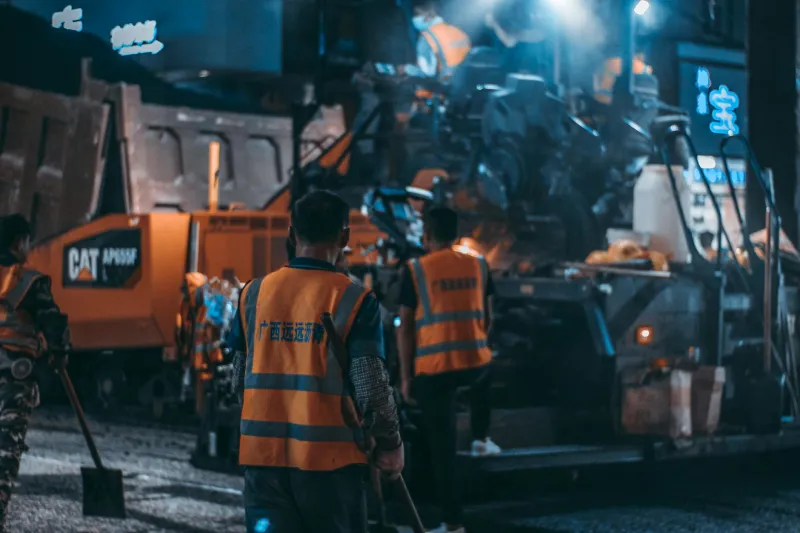
Whilst most of Britain sleeps, a different kind of orchestra takes to the fields. By torchlight and floodlamp, an army of unsung heroes conducts the most ambitious construction project you'll never see: building an entire city from nothing, all before breakfast.
It's 3am on a Tuesday in June, and Sarah Chen is knee-deep in mud, wrestling with a generator that's refusing to cooperate. As lead electrician for festival infrastructure specialists Northern Grid, she's part of the invisible workforce that makes Britain's summer festival circuit possible. "People think the magic happens when the bands take the stage," she laughs, adjusting her hi-vis jacket against the pre-dawn chill. "But the real magic? That's what we're doing right now."
 Photo: Northern Grid, via news.calderdale.gov.uk
 Photo: Sarah Chen, via financialallianceforwomen.org
Sarah's crew has been working through the night, laying the electrical foundations for what will become a 40,000-capacity festival site by Friday. Miles of cabling snake across the field like luminous veins, feeding power to stages that don't yet exist, food stalls still in flatpack form, and toilet blocks that are currently just concrete pads in the darkness.
More Than Just Plug and Play
The scale of overnight festival construction defies belief. Within 72 hours, teams like Sarah's will transform agricultural land into Britain's 15th largest city – complete with its own postal code, emergency services, and enough electrical infrastructure to power a small town.
"It's not just about putting up stages and hoping for the best," explains Marcus Williams, site manager for festival construction giants Build & Strike UK. "We're creating a functioning municipality with all the complexity that entails. Water treatment, waste management, telecommunications, security systems – it all has to work seamlessly from day one."
Marcus has been orchestrating festival builds for over two decades, watching the industry evolve from basic stage-and-fence operations to sophisticated temporary cities. His current project – a major indie festival in the Peak District – requires coordinating 200 specialists across 15 different trades, all working to millimetre-precise schedules.
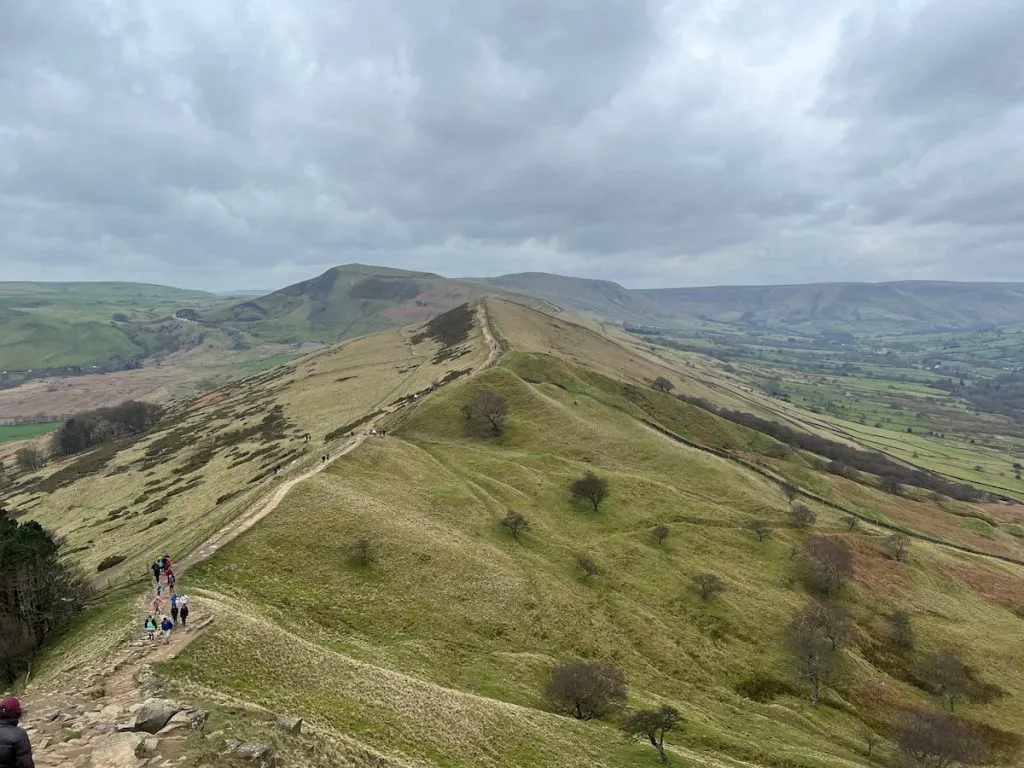 Photo: Peak District, via www.peakdistrict.org
"The logistics are mental," he admits. "We've got riggers hanging lights whilst plumbers are installing water mains three metres below. Carpenters building stages whilst sound engineers are threading cables through structures that don't technically exist yet. It's like conducting an orchestra where everyone's playing a different symphony."
The Midnight Engineers
For festival-goers, infrastructure is invisible until it fails. But for the crews building it, every cable tie and concrete block represents hours of careful planning and precise execution.
Take the deceptively simple task of powering a festival. Jamie Rodriguez, senior engineer with Amp'd Solutions, explains the complexity hidden beneath those familiar generator hums: "A major festival uses more electricity than a small town. We're talking megawatts of power distributed across dozens of locations, all of it temporary, all of it weather-resistant, all of it absolutely critical."
Jamie's team works exclusively at night, when electrical work is safest and the site quieter. "Daytime belongs to the riggers and carpenters," he says. "Night-time is ours. We're like electrical vampires – thriving in the darkness, creating the power that makes everything else possible."
The precision required is staggering. Power loads must be calculated to the amp, backup systems tested and retested, and safety protocols followed religiously. One miscalculation could plunge half the site into darkness – or worse.
Building Community Before the Community Arrives
What strikes visitors most about established festival sites isn't just their scale, but their lived-in feeling. Streets have names, areas develop distinct characters, and navigation feels intuitive rather than imposed. This doesn't happen by accident.
"We're not just building infrastructure," reflects Lisa Park, festival site designer and veteran of 15 years' worth of builds. "We're creating the bones of a community that doesn't exist yet. Every pathway, every sightline, every gathering space – it all shapes how people will connect with each other once they arrive."
Lisa's work begins months before construction, mapping human flow patterns and designing spaces that encourage both planned and spontaneous interaction. "The best festival sites feel organic, like they've grown rather than been built. That takes serious planning."
Her current obsession is creating what she calls 'discovery zones' – unexpected pockets of activity tucked between major attractions. "It's the difference between a shopping centre and a proper neighbourhood. One feels corporate, the other feels alive."
The Dawn Reveal
By sunrise, the transformation is always remarkable. What was empty farmland 12 hours earlier now hums with purposeful activity. Stages rise from the morning mist, vendor stalls bloom like geometric flowers, and the skeletal framework of a temporary city takes visible shape.
For the overnight crews, dawn marks both an ending and a beginning. The heavy infrastructure work is complete, but now comes the delicate task of adding the finishing touches that transform functional space into magical experience.
"There's this moment every morning," says Sarah, now supervising the connection of the main stage power supply, "when you step back and realise what we've actually achieved. Twelve hours ago, this was just a field. Now it's going to be home to thousands of people for the next week. That never gets old."
The Invisible Pride
The cruel irony of festival construction is that success means invisibility. If the power works flawlessly, if the water runs clean, if the stages hold firm against summer storms – nobody notices the midnight heroes who made it possible.
But for veterans like Marcus, that invisibility is the highest compliment. "When festival-goers are lost in the music, when they're dancing until 4am without a care in the world – that's when we know we've done our job properly. We've created the conditions for magic to happen."
As Britain's festival season grows ever more ambitious, these overnight architects face new challenges. Sustainability requirements demand innovative solutions, weather patterns grow more unpredictable, and audience expectations continue rising. But the fundamental mission remains unchanged: transforming empty space into extraordinary experience, one midnight shift at a time.
Next time you're wandering a festival site, marvelling at the temporary city that's sprung up around you, spare a thought for the invisible army that made it possible. They built your wonderland while you slept, and they'll dismantle it just as efficiently once the last song fades.
From now on, perhaps we'll see festival sites not just as venues, but as monuments to human ingenuity and collaborative spirit – cities built on hope, powered by dedication, and designed for joy.