Calm Is the New Mosh Pit: Inside the Sensory-Friendly Shift Reshaping UK Festival Crowds
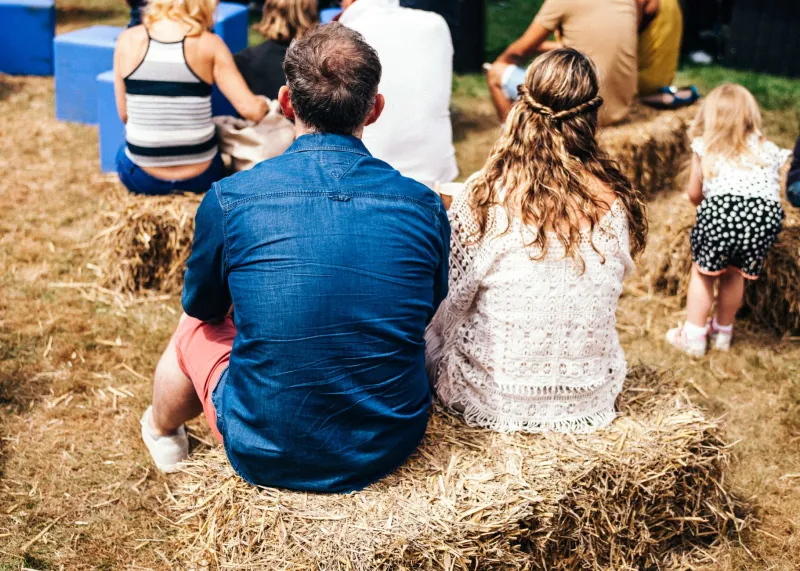
Festival fields are supposed to be loud. That's the deal, isn't it? You pay your money, you pitch your tent, and you let the bass rearrange your internal organs for three days. But walk into a growing number of UK festivals in 2026 and you'll find something else happening at the edges: quiet lanes, low-stimulation tents, relaxed performances, and stewards who know that a calm crowd is not a bored crowd.
This isn't a niche add-on anymore. It's becoming part of how festivals are designed. And the people pushing it — neurodivergent festivalgoers, families, access teams, and a new generation of organisers — are asking a bigger question: if calm works for the people who need it most, why wouldn't it work for everyone?
The quiet corner that isn't a cop-out
At first glance, the sensory-friendly space can look like the least festival part of a festival: beanbags, soft lighting, a sign asking people to keep their voices down. But these spaces are not a retreat from the music. They are part of the infrastructure that makes the music possible for more people.
Neurodivergent festivalgoers — autistic people, people with ADHD, dyslexia, sensory processing differences — have been saying for years that the festival model asks a lot: crowds, queues, strobes, sudden noise, nowhere to sit, no clear exit. In 2026, organisers are finally building answers into the site plan rather than leaving it to luck.
At several UK festivals this summer, access teams are publishing sensory maps before the gates open. They show the quiet zones, the busy junctions, the places where sound bleeds from one stage to another, and the shortest route back to camping. Some are offering pre-event walkthroughs with photographs, so arrival isn't a gamble. Others are handing out ear defenders as standard, not as a special request.
Design, not decoration
Relaxed performances are another quiet revolution. House lights stay up. Strobe lighting is dialled down or cut. Crowd barriers are softer. People are free to move, stim, leave, come back. It sounds simple, and it is. But it changes the contract between performer and audience: you don't have to stand still and stay silent to belong.
One programmer told me that the old approach was to treat calm as a compromise — something you bolted on after the lineup was booked. The new approach is to treat it as a design principle. Where does the sound spill? Where will people queue? Is there a shaded bit of ground where a parent can sit with a toddler and still hear the stage? These are not access questions. They are festival questions.
The ripple effect
The most interesting thing about the sensory-friendly shift is that it doesn't stay in its lane. Quiet camping fields fill up with people who wouldn't call themselves neurodivergent: shift workers, older ravers, parents, people who simply need a night's sleep. Clear signage helps everyone. A chill-out space gives a teenager their first taste of independence. A relaxed performance gives a family a way in.
Festivals have spent decades selling intensity. The all-night, all-weather, all-in endurance test. But endurance is not the same as joy. For a lot of people, the best bit of a festival is the moment they find a bench, a patch of shade, a friend, and a song they can actually hear. Calm is not the opposite of excitement. It's the thing that makes excitement sustainable.
What still needs work
None of this is solved. Access provision is still patchy. A quiet tent is not a substitute for trained stewards, proper viewing platforms, accessible toilets, or a complaints process that actually responds. Invisible disabilities are still misunderstood. Some festivals treat neurodivergent audiences as a marketing line rather than a design brief. And access budgets are often the first thing to shrink when costs rise.
Festivalgoers can help by asking better questions before they buy a ticket: Is there a sensory map? Can I see the site layout? What happens if I need to leave a set? Are the quiet spaces staffed? Is the low-sensory camping actually low-sensory, or just a field with a nicer sign?
The forward-looking version of the British festival isn't quieter for the sake of it. It's a place where the crowd has more shapes, more needs, more ways to join in. Quiet zones, loud joy. That's not a contradiction. In 2026, it's starting to look like the whole point.