Plan B, Plan C, Plan Whatever It Takes: Inside the Art of the Festival Emergency

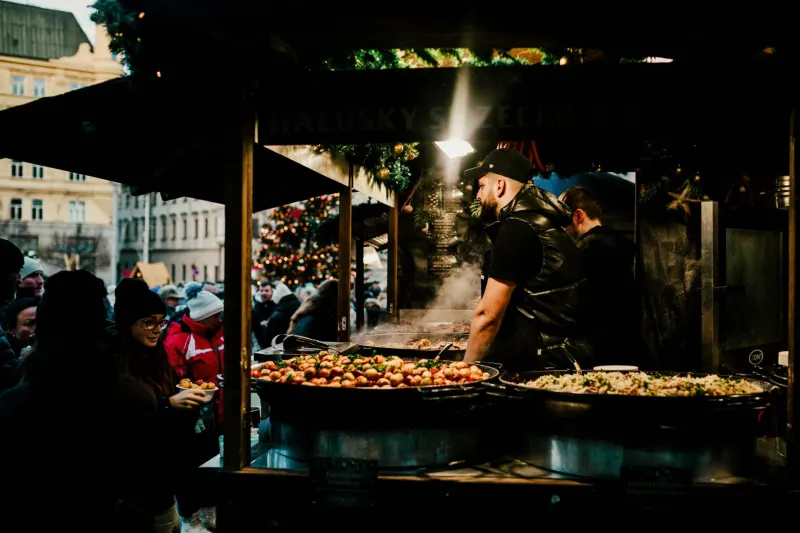
Photo: Mutley Cruz, CC0, via Wikimedia Commons
There's a particular kind of calm that experienced festival directors develop. You'll notice it if you spend enough time around them — a slightly distant look behind the eyes, as though they're perpetually running three different scenarios simultaneously. It's not aloofness. It's readiness. Because in the festival world, the question isn't whether something will go wrong. It's which thing, and when.
"Every festival has a crisis," says Deborah Haines, who has been directing mid-sized UK music events for over fifteen years. "The ones people remember fondly are usually the ones where something went sideways and somehow it made the whole thing better. The chaos becomes part of the story."
The Call Nobody Wants
Headliner cancellations are the nightmare scenario that keeps promoters awake in January, February, and every month thereafter. The reasons vary — illness, injury, personal crisis, contractual disputes, the occasional spectacular falling-out — but the effect is always the same: a hole in the schedule that is simultaneously very public and very expensive to fill.
Gareth Pryce runs a 5,000-capacity folk and roots festival in mid-Wales. In 2019, his Friday headliner pulled out at 9pm on the Thursday evening — citing a family emergency that Pryce has never publicly disputed. By midnight, he had a replacement confirmed. By noon the next day, the new act was announced. The crowd, when told from the stage, cheered.
"The key is the network," Pryce explains. "You spend years building relationships with agents, managers, artists who trust you. When the call comes in at 9pm, you're not cold-calling strangers. You're ringing people who know you'll look after their artist, who know the event is worth showing up for at short notice."
The artist who stepped in — he won't name them, partly out of loyalty and partly because the original headliner's situation was genuinely difficult — had been due a day off. They drove four hours through the night. The set they played, unrehearsed and slightly ragged, became one of those festival moments that attendees still describe in hushed, reverent tones.
When the Weather Decides It's in Charge
British festivals have a complicated relationship with British weather. It's baked into the culture — the mud, the macs, the resigned cheerfulness of 40,000 people dancing in horizontal rain. But there are moments when the weather stops being atmospheric and starts being dangerous.
Sarah Llewellyn, health and safety lead for a major outdoor arts festival in the South West, describes the protocol that kicks in when wind speeds breach safe thresholds for stage structures. "People assume it's a simple call — bad weather, shut the stage. It's not. You're balancing wind readings, structural engineer assessments, crowd positioning, how far people are from cover, whether there's a safe alternative space. You're making decisions that affect tens of thousands of people in real time."
In 2022, her team made the call to close the main stage for two hours during a summer storm that came in faster than forecast. The crowd was redirected to a covered secondary stage, where a local band — originally scheduled for a 200-person tent — ended up playing to several thousand people.
"That band has talked about it in interviews since," Llewellyn says. "For them, it was a career moment. For us, it was a relief operation. Same event, completely different experience depending on where you were standing."
The Technical Disasters Nobody Advertises
PA failures, generator outages, lighting rigs that refuse to cooperate — the technical infrastructure of a modern festival is vast, interconnected, and occasionally very fragile. The teams who manage it operate in a parallel universe to the one the audience inhabits.
Sound engineer Marcus Webb has worked UK festivals for two decades. He remembers a generator failure at a 15,000-capacity event in the East Midlands that killed power to the main stage eighteen minutes before a high-profile set.
"Eighteen minutes sounds like nothing, but in festival time it's an age," he says. "We had backup power running in eleven. The act went on four minutes late. Most of the crowd had no idea anything had happened."
The invisible competence of people like Webb is perhaps the least-celebrated feature of British festival culture. The magic only holds because hundreds of specialists are working frantically behind every smooth moment the audience experiences.
Improvisation as a Cultural Value
What's striking, talking to the people who manage these crises, is how rarely they describe the experience as purely stressful. There's something else in it — a kind of charged aliveness, a satisfaction in problem-solving under pressure that seems to be part of why they do the job.
"I think festivals attract a certain kind of person," reflects Deborah Haines. "People who are comfortable with uncertainty. Who actually find structure a bit suffocating. When everything goes wrong, those are the people who come into their own."
This might explain something broader about why British festivals, despite their logistical complexity and financial precarity, continue to produce experiences that feel genuinely warm and human. The people running them are not corporate operators optimising for efficiency. They're improvisers who happen to work in fields.
The Crowd Always Knows
There's a consensus among festival veterans on one point: audiences are far more forgiving than promoters expect, provided they're treated with honesty and respect.
"Tell people what's happening," says Gareth Pryce. "Don't spin it, don't make it sound worse or better than it is. Just be straight. British festival crowds are extraordinarily good-natured when you level with them. It's when you try to manage them that things go wrong."
That honesty, that willingness to acknowledge the chaos and invite the crowd into the solution, might be the most distinctly British thing about the whole enterprise. The festival emergency, handled well, becomes a shared story. The adversity becomes the memory. The plan that fell apart becomes the weekend everyone talks about for years.
Which is, when you think about it, exactly what a festival is supposed to be.