Home by Midnight: The Day Festival Boom Betting on Shorter, Sharper Summer Saturdays
For a long time, the British festival was a test of stamina. You queued on Friday, pitched in the rain, lost your friends by Saturday, and spent Sunday negotiating with a portaloo. The music was the reward, but the weekend was the obstacle course.
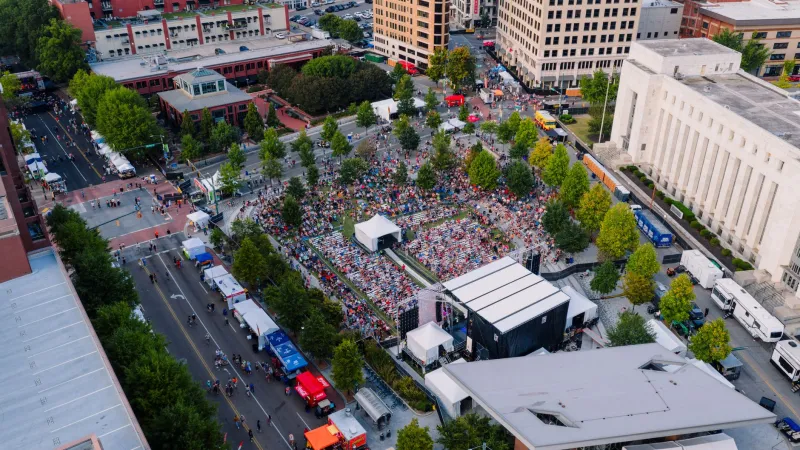
In 2026, a different model is having a moment. Day festivals — urban park stages, warehouse courtyards, rooftop sessions, high street squares — are selling out without asking anyone to sleep in a field. The best summer nights now end before midnight. And for a lot of people, that's exactly the point.
The end of the endurance test
The day festival is not a new idea. But the current wave is sharper, better programmed, and more honest about why people choose it. A one-day ticket is cheaper than a weekend ticket. The travel is simpler. You can be home for breakfast. You can bring a child, or a parent, or a friend who doesn't camp. You can go to work on Monday without feeling like you've been away for a month.
Cost is the obvious driver. Weekend festivals have become big-ticket events, and the extras — travel, food, drink, camping gear, the inevitable replacement wellies — add up. A day festival doesn't ask you to buy a new life for the weekend. It asks you to buy a ticket and get the train.
Who is the day festival for?
Everyone who has ever looked at a festival lineup and thought: I'd love that, but I can't do the whole weekend. Carers. Parents. Shift workers. Neurodivergent people who find camping overwhelming. Older music fans who want to see the band and sleep in their own bed. Teenagers taking their first steps into live music with a parent nearby. People who simply like the idea of a festival without the 4am walk back to a tent that has started to leak.
The day festival is not a lesser festival. It's a different shape. It says the music matters, the crowd matters, the food matters — but the endurance test doesn't have to.
Promoters think smaller
The promoters making this work are thinking like event designers, not just bookers. They programme a tight afternoon-to-evening arc: a local opener, a rising name, a headline set that lands before the last train. They invest in shade, water, food, and clear transport information. They partner with local venues and community groups. They treat the curfew as a creative constraint, not a compromise.
One Bristol promoter told me that the 4pm slot now gets as much care as the headline. That's the shift. A shorter day has to be sharper. There's no room for filler. You have to give people a reason to arrive early and a reason to stay late — and then send them home happy.
The local ripple
Day festivals also fit the way many UK towns and cities are trying to rebuild their cultural life. They use existing spaces: parks, squares, warehouses, venues that already have toilets and a licence. They bring footfall to high streets. They can be run with a smaller carbon footprint than a greenfield camping festival, though nobody should pretend they're impact-free. And they make live music feel like part of normal life rather than a once-a-year expedition.
The day festival renaissance is not about giving up on the weekend. It's about admitting that the weekend has changed. In 2026, the best summer night might be the one that lets you dance until 11, eat something decent, and be home before the city goes quiet. Shorter, sharper, and still full of joy. That sounds like the future to us.