Press Play Before You Pack: Why the Pre-Festival Playlist Has Become Britain's Most Personal Cultural Tradition
Press Play Before You Pack: Why the Pre-Festival Playlist Has Become Britain's Most Personal Cultural Tradition
Ask someone to describe their festival preparations and they'll probably mention the camping gear checklist, the argument about who's driving, the last-minute scramble for a waterproof jacket. But push a little further and something else almost always surfaces — something they might describe with slight embarrassment, as though it's a private thing, which in a way it is.
The playlist.
Not the official Spotify release from the festival's press team. Not the algorithmically generated "sounds like" recommendation engine. The one they made themselves, over several evenings, tweaking the running order with the kind of care usually reserved for more serious undertakings. The one that starts playing the moment the postcode goes into the satnav and doesn't stop until the car park steward waves them into a muddy field.
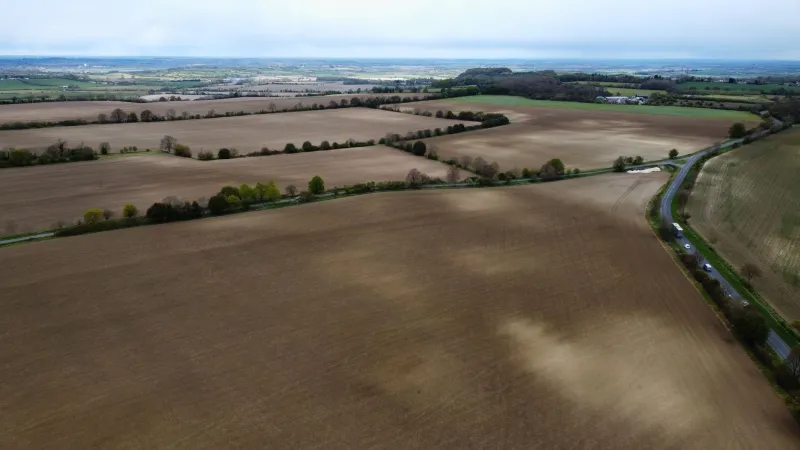
"It sets the tone for everything," says Robbie, a 34-year-old teacher from Manchester who has attended the same festival in the Peak District for eleven consecutive years. "Get the playlist wrong and the whole journey feels off. Get it right and you're already there before you've left the M62."
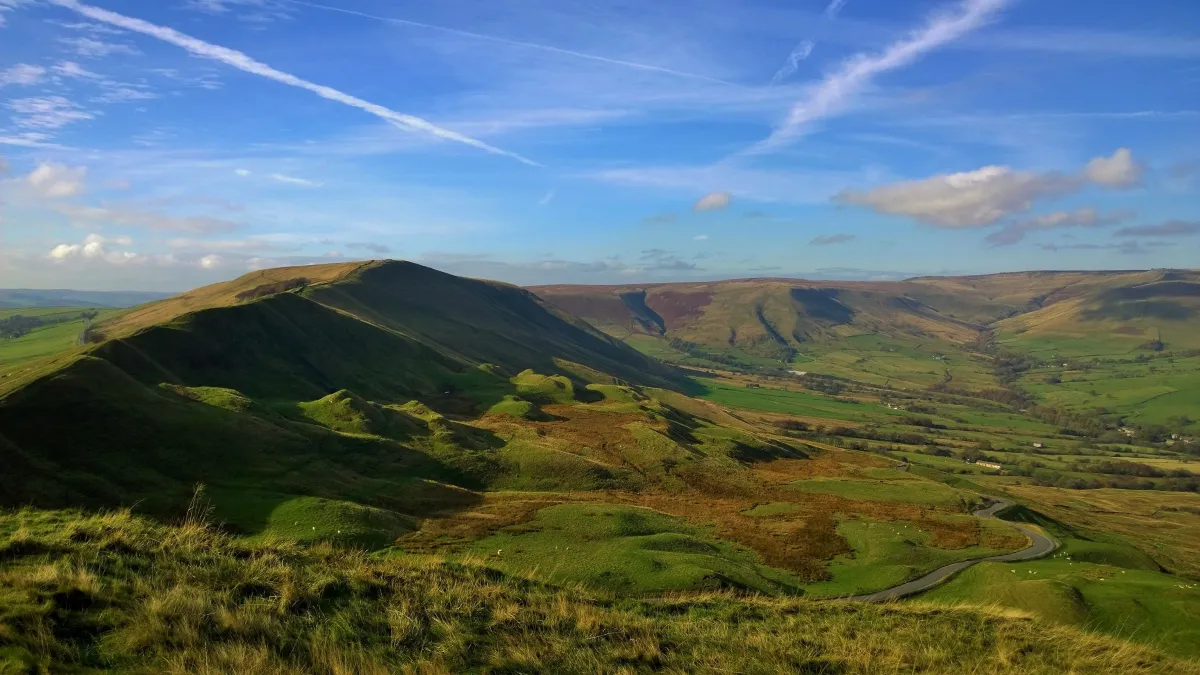 Photo: Peak District, via i.pinimg.com
The Mixtape Reborn
The pre-festival playlist is, in one sense, simply the latest iteration of a tradition that stretches back through decades of British music culture. The road trip compilation. The party tape. The carefully sequenced cassette that someone made for someone else with the tracklisting written in careful biro on the inlay card.
What's changed is the infrastructure. Streaming platforms have given the ritual near-infinite scope — no more 90-minute tape limit, no more hunting through a record collection for the song you know you have somewhere. The tools are frictionless now. Which means the creative and emotional investment has, if anything, intensified.
Spotify's own data suggests that the volume of user-created playlists spikes sharply in the weeks before the major UK festival season. The platform won't give specifics, but the pattern is consistent: late May and early June see a pronounced surge in playlist creation activity, particularly among users in their twenties and thirties.
"What's interesting is that people aren't just listening differently in that period," says Dr Naomi Clarke, a music psychologist at a university in the north of England who has studied the relationship between anticipation and musical behaviour. "They're curating differently. There's an intentionality to it. They're not consuming music passively — they're constructing an experience."
The Architecture of Anticipation
Spend any time talking to seasoned festival-goers about their playlist habits and certain structural principles start to emerge. The opening track is almost never a banger — it tends to be something that signals departure, transition, the leaving-behind of ordinary life. Something with a sense of motion built into it.
The middle section is where it gets personal. This is where you find the acts you're most excited to see — not necessarily their most obvious songs, but the deep cuts, the B-sides, the album tracks that feel like insider knowledge. Listening to them in the car is a form of preparation, a way of arriving at the show already fluent in the language.
And then there's the final stretch, as the festival site gets close and the road signs start referencing it by name. This is where the tempo picks up. Where the volume goes higher. Where the person in the passenger seat starts doing something embarrassing with their arms.
"It's basically a film score for your own life," says Yemi, a 28-year-old graphic designer from Birmingham who creates what she calls "architectural playlists" — carefully mapped emotional journeys with specific songs assigned to specific points in the journey. "I know roughly where I'll be when certain tracks come on. That's deliberate. It's choreography."
Generational Frequencies
The playlists look different depending on who's making them, and the generational variation is striking. For listeners in their forties and fifties, the pre-festival playlist tends to reach backwards as well as forwards — a blend of the acts they're going to see now and the acts that first took them to fields in their youth. There's a nostalgic strand woven through it, a conversation between who they were and who they are.
For younger festival-goers, the relationship with the playlist is more present-tense, more genre-fluid. A 22-year-old heading to a festival in 2025 might have a playlist that moves from hyperpop to afrobeats to indie folk within the space of twenty minutes, reflecting a listening culture that has largely abandoned the idea of genre loyalty.
"My mum and I literally cannot agree on a single song for the drive," says Caitlin, who attends a summer festival in Wales with her family every year. "So we do the first hour her way and the second hour mine. It's become a whole thing. It's actually one of my favourite bits of the weekend."
That negotiation — the collaborative playlist, the shared curation — is its own form of intimacy. Music therapists and relationship researchers have long noted that making music choices together is a surprisingly effective bonding exercise. The pre-festival playlist, in its group form, is essentially a low-stakes creative collaboration that ends in everyone feeling more aligned than when they started.
The Song That Means Something
Almost everyone we spoke to for this piece mentioned one specific song — not always the same one, obviously, but a song that has acquired a particular significance through repetition. A track that has been on the playlist for so many years, played at such a specific moment in the journey, that it has become inseparable from the feeling of festival anticipation itself.
For Robbie, it's a song he first heard at the festival he now attends annually — heard it live, fell in love with it, and has opened every pre-festival playlist with it ever since. "It's like a door," he says. "The moment it starts, I'm already in it. Already there."
This is what the pre-festival playlist ultimately is: a technology of transportation. Not the literal kind — the motorway does that job — but the psychological kind. A device for moving yourself, in advance, into the emotional register of what's coming. A way of beginning the festival before the festival begins.
In an age when so much of our musical experience is curated by algorithm, there's something quietly radical about that. About taking the time to make something by hand — or by hand's digital equivalent — and using it to mark the threshold between ordinary life and something better.
From now on, that feels like a tradition worth celebrating. Press play.