Walls With Better Stories: The Unlikely Venues Turning Britain's Built Heritage Into Living Stages
Walls With Better Stories: The Unlikely Venues Turning Britain's Built Heritage Into Living Stages
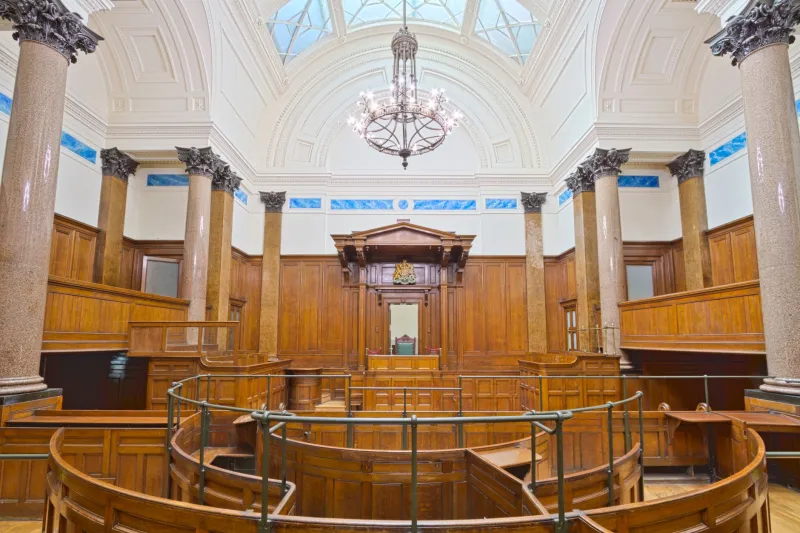
The acoustics in a 19th-century courthouse are, it turns out, extraordinary. The high vaulted ceilings, the dark wood panelling, the particular way the room narrows towards the bench — all of it conspires to create something that no purpose-built venue could replicate. Which is why, on a Thursday evening in late autumn, a string quartet is setting up where the prosecution counsel once stood, and a small audience is taking seats in the public gallery for a concert that will be, by any measure, unlike anything available at the local arts centre.
"The building does most of the work," says the curator who organised the event, a woman called Priya who runs a small arts collective out of a shared workspace nearby. "We just had to get out of its way."
This is the central insight driving one of the most exciting — and arguably most sustainable — developments in Britain's cultural landscape right now. Across the country, a loose network of curators, artists, local authorities, and civic-minded landlords are discovering that the most interesting performance spaces aren't the ones that get built from scratch. They're the ones that already exist, waiting to be reimagined.
The Inventory We Already Have
Britain is, in a very real sense, drowning in interesting buildings. The post-war decades of civic ambition produced libraries, lidos, courthouses, and public halls on a scale we've never quite matched since. Many of these structures now sit in various states of partial use, repurposing, or quiet redundancy. The listed building registers are full of them. So are the anxious spreadsheets of local authority asset managers.
For cultural programmers willing to engage with the bureaucratic complexity of accessing these spaces — and it is complex, involving insurance riders, acoustic surveys, fire risk assessments, and the particular patience required when dealing with institutions that weren't designed with live performance in mind — the rewards can be remarkable.
In Glasgow, a campaign to activate the city's derelict Victorian baths as a performance venue took three years of negotiation and a small army of volunteers to realise. The first event — a site-specific sound installation that used the empty pool as a resonant chamber — sold out in under an hour. The waiting list for subsequent events has never really gone away.
"People want to be somewhere that has weight," says the project's lead organiser, a former theatre director called Alistair. "Not just physical weight — though that matters too, the sense of stone and age and permanence. But historical weight. The feeling that things happened here before you arrived, and will go on happening after you leave."
The Bureaucratic Art Form
It would be dishonest to romanticise this work without acknowledging how genuinely difficult it is. Getting a local authority to agree to a one-night performance in a building it technically owns but doesn't quite know what to do with requires a very particular skill set — one that sits somewhere between arts producer, property developer, and diplomatic envoy.
Jordan, who has been producing site-specific events in unconventional spaces across the Midlands for the past six years, describes the process with the weary affection of someone who has learned to love the obstacle course. "The first question is always liability. Then it's access — who has the keys, who's responsible for the building overnight, what happens if something goes wrong. Then it's licensing. Then it's the neighbours. Then, somewhere around meeting number four, someone from the council actually starts to get excited about it."
That moment of institutional excitement, when it comes, is transformative. Local authorities that engage seriously with the idea of activating their underused civic assets tend to discover something useful: culture is a remarkably effective form of community asset management. A building that has sat dark and slightly embarrassing for a decade suddenly has a story again. It gets talked about. People photograph it, share it, return to it.
In Peckham, the Bold Tendencies programme has been staging sculpture and performance events on the roof of a multi-storey car park for well over a decade now. What started as a provocation has become, improbably, a beloved institution — proof that the formula works, and that audiences are entirely willing to climb seven flights of stairs for something worth seeing at the top.
The Artists Who Respond to Constraint
There's a particular kind of creative mind that thrives in this context. Not every artist is suited to working in a space that pushes back — that has its own structural logic, its own sightlines, its own acoustic personality. But for those who are, the results can be extraordinary.
Sophie, a composer and sound artist based in Bristol, has spent the last four years making work specifically for non-standard civic spaces. Her most recent piece was performed in a decommissioned telephone exchange in Cardiff — a building full of metal shelving, concrete floors, and the ghostly infrastructure of a pre-digital communications age.
"I spent three days just being in the space before I wrote a single note," she says. "Listening to it. Working out what it wanted to be. The building had this incredible metallic resonance — these beautiful low frequencies that you could feel in your sternum. The piece grew out of that. I couldn't have written it anywhere else."
This responsive, site-specific approach to composition and performance is increasingly central to how Britain's more adventurous artists are thinking about live work. It's a rejection of the idea that culture needs to happen in designated cultural spaces — and an embrace of the radical proposition that meaning can be found anywhere, if you're paying the right kind of attention.
Forward Into the Past
There's something deeply optimistic about this movement, even when its raw material is buildings that have seen better days. It's a refusal to treat the past as merely historical — a determination to keep the built environment alive, generative, in conversation with the present.
For From Now On, that feels like the right direction of travel. Not always building new when something extraordinary already stands. Not always seeking the purpose-built when the accidental will do. The most interesting stages in Britain right now might well be the ones that were never meant to be stages at all — and the people unlocking them deserve every bit of the attention they're starting to receive.
The quartet in the courthouse, incidentally, played magnificently. The judge's bench made an excellent place to rest a cello case. And the acoustics, as Priya promised, were extraordinary.