No Permit, No Problem: The Grassroots Gig-Makers Rewriting Britain's Cultural Rulebook
Photo: underground warehouse gig DIY music event crowd UK urban, via cdn1.i-scmp.com
The address arrives by text at 7pm. You're told to wear something you don't mind getting paint on. Bring your own cup. There's no lineup poster, no branded wristband, no sponsored stage. By 9pm, 200 people are crammed into a converted printworks in Digbeth, watching a band that doesn't have a Spotify page yet, and something genuinely electric is in the air.
This is not the fringe. This is, increasingly, the point.
The Scene Nobody's Selling You
Across Britain — in former industrial units in Sheffield, community gardens in Hackney, pub car parks in rural Shropshire, and repurposed church halls in Glasgow — a parallel festival culture is quietly flourishing. It doesn't advertise on national radio. It doesn't have a corporate sponsor. It rarely makes the weekend supplements. And its organisers would largely prefer it that way.
"The moment something gets too visible, it changes," says Nia Griffiths, who has been running irregular music and art gatherings in Cardiff for the past four years under the loose collective name Tŷ Agored — Open House in Welsh. "We've had people ask if they can sponsor us, ask if we want to scale up. And we're like... no. The smallness is the whole thing."
Nia's events typically accommodate between 80 and 300 people, depending on the venue. They combine live music with visual art, spoken word, food from local producers, and what she describes as "a very deliberate lack of agenda." Tickets, when they exist at all, are priced on a sliding scale. Nobody is turned away for lack of funds.
"We've never had a headliner," she says. "We've never had a main stage. Everyone performs in the same space, at the same volume, for the same amount of time. That's a political decision as much as a practical one."
Why Now?
The growth of DIY festival culture in Britain isn't happening in a vacuum. It's a direct response to a mainstream festival landscape that many younger organisers and attendees describe as increasingly inaccessible, corporate, and creatively conservative.
Ticket prices for major UK festivals have risen sharply in recent years, with weekend passes for flagship events now regularly exceeding £300 before travel and accommodation. The booking process itself — fraught with queue systems, dynamic pricing, and resale market chaos — has become a source of genuine frustration.
But the critique goes beyond cost. "There's a homogenisation happening," argues Kofi Mensah, who organises a quarterly warehouse event in Manchester called Underfoot. "The same ten artists rotating between the same twenty festivals. The same aesthetic, the same sponsorship deals, the same experience. People are hungry for something that feels like it hasn't been market-tested."
Kofi's events are deliberately genre-fluid — a recent Underfoot featured an experimental electronic artist from Salford, a jazz trio, a poet, and a DJ playing Ghanaian highlife. There was no stage. Performers set up in different corners of the space. Audience members moved between them throughout the night.
"People don't know what to expect when they come," he says. "That's the whole point. Uncertainty is the experience."
The Logistics of Doing It Yourself
Running events outside the established festival infrastructure is not without its challenges. Licensing, noise restrictions, insurance, accessibility requirements — the regulatory landscape is complex, and DIY organisers navigate it with varying degrees of formality.
"We do everything properly," says Jess Fairweather, who organises a community-led outdoor gathering in rural Derbyshire called Loam. "Temporary event notices, public liability insurance, waste management plan, first aid cover. It takes months of work. But people assume because we're small and independent that we're somehow dodging the rules, and that's not fair on us or on the communities we work with."
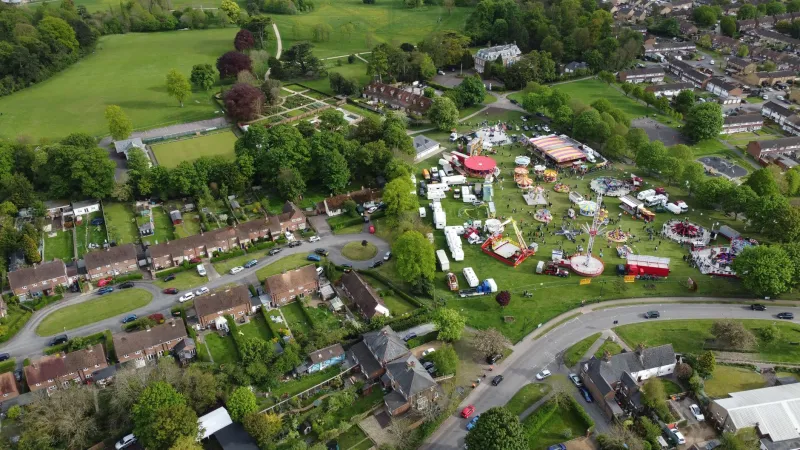
Loam started in 2021 as a gathering of about sixty people in a friend's field. Last summer, it welcomed just over 800, with a programme that included live music, a community orchard project, workshops in natural building techniques, and a food market sourced entirely from within a 30-mile radius.
"We made a deliberate decision not to grow beyond a certain size," Jess explains. "Once you hit a certain scale, you stop being a community event and start being a product. We're not interested in being a product."
The Artists Who Prefer the Small Room
Not every musician is chasing the main stage. A growing number of artists — some of them with substantial followings — are actively choosing to play DIY spaces over established venues, citing creative freedom, genuine connection with audiences, and a rejection of what one musician calls "the performance of success."
Kira Solano, a London-based multi-instrumentalist with two critically acclaimed albums behind her, spent last summer playing a series of unannounced shows at DIY events across the UK. "Nobody knew I was going to be there. I just showed up with a guitar and played for an hour. No soundcheck, no rider, no meet-and-greet. It was the most alive I've felt on stage in years."
For Kira, the DIY circuit offers something that even well-intentioned mid-sized festivals struggle to replicate: genuine unpredictability. "When the audience doesn't know what's coming, they're actually present. They're not waiting for the song they recognise from the playlist. They're just listening."
Are These the Real Future?
It would be too easy — and probably wrong — to frame DIY festival culture as simply anti-establishment. The organisers and artists involved are not, by and large, hostile to large festivals. Many of them attend and love them. What they're building is something different: a complement, not a replacement.
"Big festivals do things small events can't," acknowledges Nia Griffiths. "They give artists huge platforms, they bring communities together at scale, they generate economic activity. I'm not against them. I just think there's a question about what happens to the culture if that's the only model."
The question feels increasingly urgent. As consolidation continues in the live events industry and ticket prices climb further out of reach for many young people, the grassroots ecosystem may become not just a creative alternative but a genuine lifeline — the place where new artists find their feet, new audiences find their people, and new ideas find the space to breathe before the main stage ever comes calling.
From a printworks in Digbeth to a field in Derbyshire, Britain's DIY festival makers are doing what they've always done: building something worth showing up for, on their own terms, from the ground up. That, when you think about it, is exactly how every great cultural moment starts.