Come From Away: Why Continental Europeans Are Making Britain's Festivals Their Summer Religion
Photo: USFWS Pacific Southwest Region, Public domain, via Wikimedia Commons
Come From Away: Why Continental Europeans Are Making Britain's Festivals Their Summer Religion
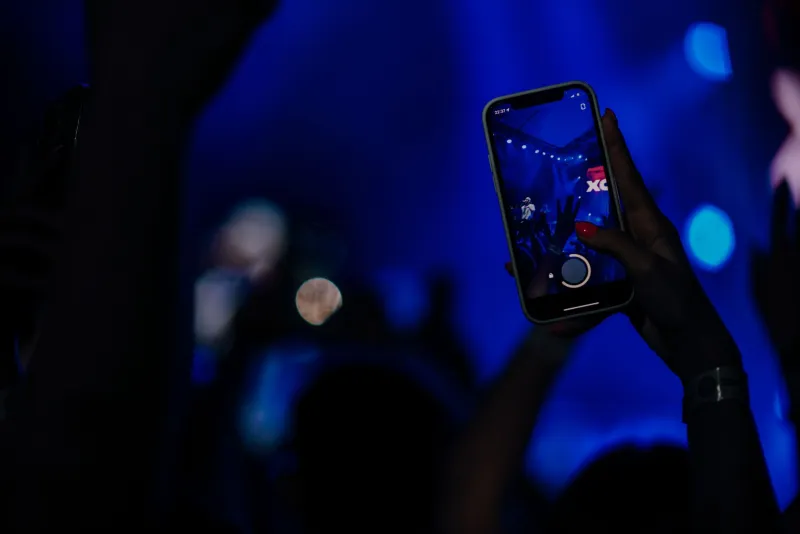
Marta Kovačević first heard about Glastonbury from a colleague in Zagreb. She'd seen the photographs — the pyramids of light, the sea of tents stretching to the horizon, the mud, always the mud — and assumed it was the kind of thing that looked better on Instagram than it felt in real life. Then she went. That was 2018. She's been back twice since, and already has her eye on tickets for next year.
"There is nothing in Croatia, or anywhere in Europe I have visited, that feels quite like this," she says, standing outside the Park Stage on a Tuesday afternoon in June. "It is not just a music festival. It is like a society. A temporary country."
Marta is far from alone. Across the British festival circuit — from Glastonbury and Latitude to Green Man, End of the Road, and the increasingly internationally-recognised Bluedot — organisers are reporting a steady, sustained rise in overseas ticket-buyers, with continental Europe accounting for a disproportionate share. The numbers are still modest relative to domestic attendance, but the trajectory is unmistakable, and the cultural conversation it's generating is fascinating.
 Photo: Green Man, via mythologyinquirer.com
What the Data Is Telling Us
Glastonbury doesn't release granular attendance breakdowns, but anecdotal evidence from the festival's own volunteer networks and travel operators who package UK festival trips suggests European visitors have roughly doubled as a proportion of the crowd since the early 2010s. Green Man, which has cultivated a particularly devoted international following given its emphasis on independent music and spectacular natural setting, estimates that around 12 per cent of its 2024 attendance came from outside the UK — with Germany, the Netherlands, France, and Scandinavia consistently represented in its top five overseas markets.
Specialist travel companies have started to take notice. A handful of European tour operators now offer curated 'British Festival Packages' — combining accommodation, transport, and even guided site orientation — aimed at first-time visitors who want the experience without the logistical anxiety of navigating a 200,000-person site alone.
"The British festival is becoming a bucket-list cultural destination in the same way Abbey Road or Stonehenge once were," says Jess Hartley, who runs a boutique travel consultancy specialising in cultural tourism into the UK. "Except this one involves camping in a field and watching a band you've never heard of at two in the morning, which is arguably more memorable."
The Mythology of the British Field
Ask European visitors what draws them specifically to British festivals rather than the continent's own well-established circuit — Roskilde in Denmark, Rock Werchter in Belgium, Primavera in Barcelona — and a few consistent themes emerge.
The first is scale of experience. British festivals, particularly the larger independents, tend to offer a density of programming — music, arts, theatre, film, debate, craft, food — that feels genuinely overwhelming in the best possible sense. There is an implicit philosophy that the festival is a complete world, not merely a venue.
The second is the particular culture of participation. "At many European festivals, you go to watch," says Florian, a graphic designer from Hamburg who has attended both Glastonbury and End of the Road. "In Britain, you feel like you are part of making it happen. People talk to strangers. People dance in the rain. Nobody is too cool to be enthusiastic."
The third — and this is the one that surprises British festivalgoers when they hear it — is the weather. Not despite it, but because of it. The mythology of British festival mud has become, perversely, a selling point. The shared adversity, the collective decision to have a brilliant time regardless, has become part of the product's appeal.
How Festivals Are Adapting
Not every UK festival has consciously courted international audiences, but the smarter ones are increasingly thinking about what it means to be genuinely welcoming to visitors for whom this might be a once-in-a-decade trip.
Green Man has invested in improved digital wayfinding and multilingual site guides — a small gesture that signals awareness. Several festivals have begun partnering with European music publications and cultural platforms to extend their editorial reach before tickets even go on sale. The logic is straightforward: if someone in Amsterdam is already reading about your lineup in March, they're considerably more likely to be on a coach from Bristol in August.
There's also a growing conversation about accessibility in the broadest sense — making sure that someone arriving without a car, without a domestic support network, and potentially without fluent English can navigate the experience confidently. This isn't purely altruistic; international visitors tend to spend more on-site, arrive earlier, and stay longer than domestic day-trippers.
What It Reflects About Britain
There's something quietly profound about the fact that, at a moment when Britain's relationship with Europe has been defined by political friction and border anxiety, a reverse pilgrimage is quietly gathering pace. Europeans are choosing to come here — not to our galleries or our government buildings — but to our fields.
Perhaps that's precisely the point. The British festival exists in a kind of sovereign space that sits apart from the political weather. It is a place built on temporary consensus, collective goodwill, and the shared belief that music and community are worth standing in a queue for.
Marta from Zagreb puts it more simply. "When I am at Glastonbury," she says, "I do not feel like a visitor. I feel like I belong somewhere. That is a rare thing."
From now on, it seems, more and more people are willing to cross a sea to find it.