Empty Streets, Full Hearts: The Strange Quiet After the Festival Leaves Town
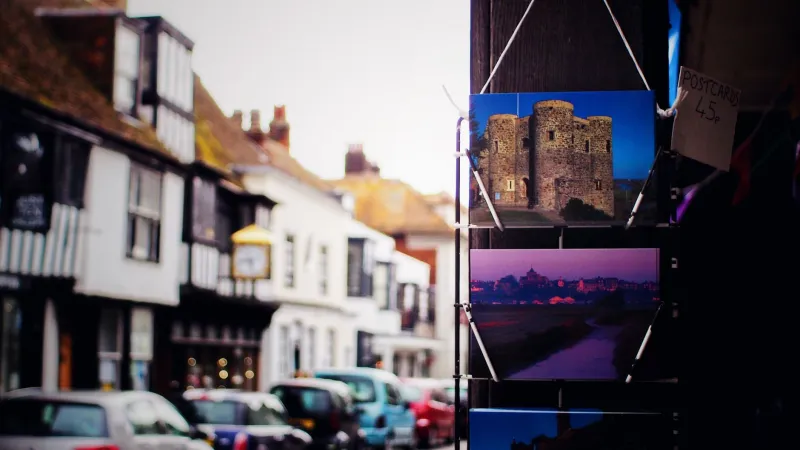
It happens on a Monday morning, usually. The bunting is still up. There's a crushed plastic cup in the gutter that the sweepers somehow missed. And Diane, who runs the bakery on the high street, is standing behind her counter with a look on her face that she struggles to put into words.
 Photo: Diane, via tantovital.com
"It's like the morning after Christmas," she says, wiping down the glass display case. "You know it was wonderful. You know it's over. And there's this strange flatness to everything."
Diane's town — a mid-sized market settlement in the West Country — hosts a festival that draws upwards of 30,000 people over a long weekend every July. For roughly 72 hours, the population multiplies. The streets pulse. The pub runs out of real ale by Saturday lunchtime without fail. And then, almost as suddenly as it arrived, it all evaporates.
What's left behind is the subject of far less coverage than the spectacle itself. But it's arguably just as interesting.
The Economics of the Echo
For local businesses, the festival weekend is often a financial cornerstone. Takings can triple, sometimes more. The off-licence three doors down from Diane's bakery does a month's worth of trade in a single evening. The B&Bs are booked solid from the moment the lineup drops. Even the quieter end of the high street — the hardware shop, the charity bookstore — sees a bump.
So when Monday arrives and the footfall evaporates, there's a very practical readjustment to make. Staffing levels drop back. The extra stock gets moved to the storeroom. Spreadsheets get updated.
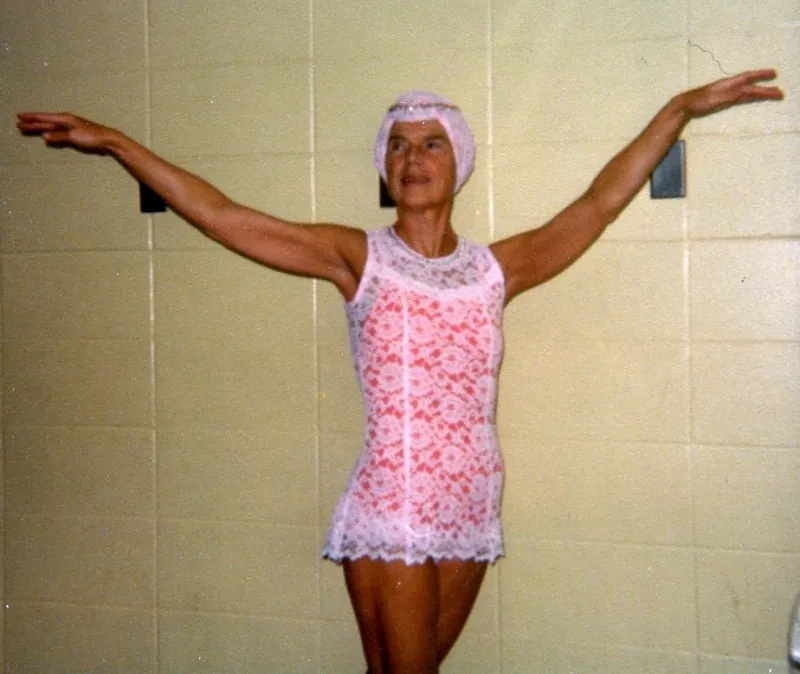
But alongside the accounting sits something less quantifiable. Marcus, who manages the town's oldest pub, describes it as a kind of emotional decompression. "Your body's been running on adrenaline for four days," he says, leaning on the bar that's currently serving a grand total of three customers. "The noise, the energy, the constant movement. And then you're just... here again. Which is fine. This is your life. But it takes a day or two to remember that."
 Photo: Marcus, via i.pinimg.com
Reclaiming the Pavement
For residents who don't have a commercial stake in proceedings, the dynamic is different — and often more ambivalent. The festival is something that happens to their town as much as for it. Roads get closed. Parking becomes a blood sport. The queue for the post office wraps around the corner.
So when normality resumes, there's genuine relief. Sheila, who has lived two streets from the festival site for twenty-three years, is refreshingly honest about it. "I love that we have it. I genuinely do. It puts us on the map and I've seen some incredible things over the fence over the years." She pauses. "But I also love walking my dog on a Tuesday morning and having the whole path to myself again."
That reclamation of space — of pavements, of quietude, of the unremarkable rhythm of ordinary life — is something several residents describe with a warmth that surprised us. There's no resentment in it, not really. It's more like rediscovering something you didn't realise you'd temporarily surrendered.
The council workers who manage the clean-up operation have their own relationship with the transition. For the team lead on site clearance, a man called Terry who has been doing this job for eleven years, the Monday morning shift is almost meditative. "You're walking through what was basically a city 48 hours ago," he says. "And now it's just a field again. Or it will be, once we're done. There's something about that process — watching a place become itself again — that I find quite moving, actually."
The Psychology of Aftermath
There's a concept in psychology sometimes called post-event processing — the way our minds continue to work through an experience long after it's finished, often replaying highlights, cataloguing feelings, gradually integrating what happened into our ongoing sense of self. Festival towns, it turns out, do something similar at a community level.
Conversations in the days after a festival tend to take on a particular quality. Strangers compare notes in the supermarket. The local Facebook group fills with photographs. The pub regulars reconstruct the weekend from overlapping angles, filling in gaps, laughing at the bits that went wrong.
"There's a shared ownership of it," says Marcus. "Even the people who stayed well away from the actual site — they feel like it's theirs. It happened here. That means something."
This collective processing is, arguably, one of the less-discussed gifts that festivals give their host communities. The event becomes a shared reference point, a chapter in the ongoing story a town tells about itself. Ask someone who grew up in a festival town to describe their childhood summers and the festival will almost always feature — not necessarily as a direct experience, but as atmosphere, as backdrop, as the annual proof that their small corner of Britain mattered to the wider world.
What the Silence Actually Says
Back in the bakery, Diane is starting to fill the display case for the morning rush — a modest, familiar handful of regulars rather than the extraordinary tide of last week. She doesn't seem sad, exactly. More settled.
"By Wednesday I've stopped noticing it," she admits. "Life fills back in. It always does."
But she also says something else, almost as an afterthought, that sticks. "I think the quiet after is part of it, you know? It's not separate from the festival. It's the last bit of it. The bit where you sit with what it meant."
That feels right. The silence that descends on a festival town isn't emptiness — it's resonance. The echo of something that mattered, still bouncing off the walls of an ordinary Tuesday. And if you listen carefully enough, it's telling you something about why we gather in the first place: not just for the noise, but for what the noise leaves behind.
From now on, maybe that's worth paying attention to.