Show Up and Give: The Tens of Thousands Who Make Britain's Cultural Calendar Possible
Photo: Cathy Goodwin, member of the International Academy of Aquatic Art (Chicago IL 60646), CC BY-SA 3.0, via Wikimedia Commons
Show Up and Give: The Tens of Thousands Who Make Britain's Cultural Calendar Possible
At 6am on a Saturday at a large festival site in Somerset, while most of the 40,000 attendees are still asleep in their tents, Beverley is already on her third cup of tea and has been awake for two hours. She's 57, a secondary school librarian from Coventry, and this is her ninth consecutive year volunteering at the same festival. Her role this weekend: managing a team of twelve people on the main gate from sunrise to midday.
"My friends think I'm mad," she says cheerfully, watching the first bleary-eyed festivalgoers shuffle past. "They say: 'Why would you spend your holiday working?' And I try to explain that this doesn't feel like work. It feels like coming home."
Beverley is not unusual. Across Britain's festival and live arts calendar, tens of thousands of people like her give their time, their energy, and often their annual leave to make events happen. They collect litter and check wristbands and give directions and manage stages and serve food and first-aid the injured and, when everything is going right, simply hold the whole magnificent enterprise together.
Without them, most of British festival culture would not exist.
The Scale of It
The numbers are genuinely staggering. Glastonbury alone relies on approximately 10,000 volunteers per year across its various teams — a workforce larger than many UK towns' entire employed populations. Across the broader festival calendar, organisations like Hotbox Events, Oxfam Stewards, and A Greener Festival's volunteering network collectively mobilise somewhere between 50,000 and 80,000 people each summer.
Volunteer roles span an extraordinary range. There are the high-visibility, logistically critical positions: stewarding, traffic management, first aid, accessibility support. There are the behind-the-scenes roles: kitchen assistance, recycling sorting, backstage support. And there are the more creative positions that often go unnoticed — the people running kids' activity areas, facilitating community workshops, or staffing the welfare tents that quietly look after those having a hard time.
Many of these roles come with a ticket in exchange for hours worked — a transaction that suits both parties. For cash-strapped young people, it's a way into events they couldn't otherwise afford. For festivals, it's a workforce that is motivated, often highly skilled, and — crucially — invested in the event's success in a way that a casual agency hire rarely is.
But the transactional framing only tells part of the story.
Why They Really Come Back
Spend time talking to experienced festival volunteers and a more complex picture emerges. Yes, the free ticket matters, especially for first-timers. But it rarely explains why someone returns year after year, often to the same event, sometimes to the same role, building expertise and relationships over a decade or more.
What keeps people coming back is community.
Dan, 34, from Newcastle, has stewarded at the same northern folk festival for six years. He's part of a team of about thirty people, many of whom he now counts among his closest friends. "We have a WhatsApp group that's active all year," he says. "We meet up in January to do a debrief, even though the festival isn't until July. These are people I'd never have met otherwise — different ages, different backgrounds, different parts of the country. The festival brought us together and now we're just... friends."
This social dimension — the formation of a distinct volunteer community within the broader festival community — is something that researchers have begun to document more formally. Dr Emma Ricketts, whose work at the University of Exeter examines social capital in arts contexts, describes festival volunteer networks as "one of the more underappreciated sites of community formation in contemporary British life."
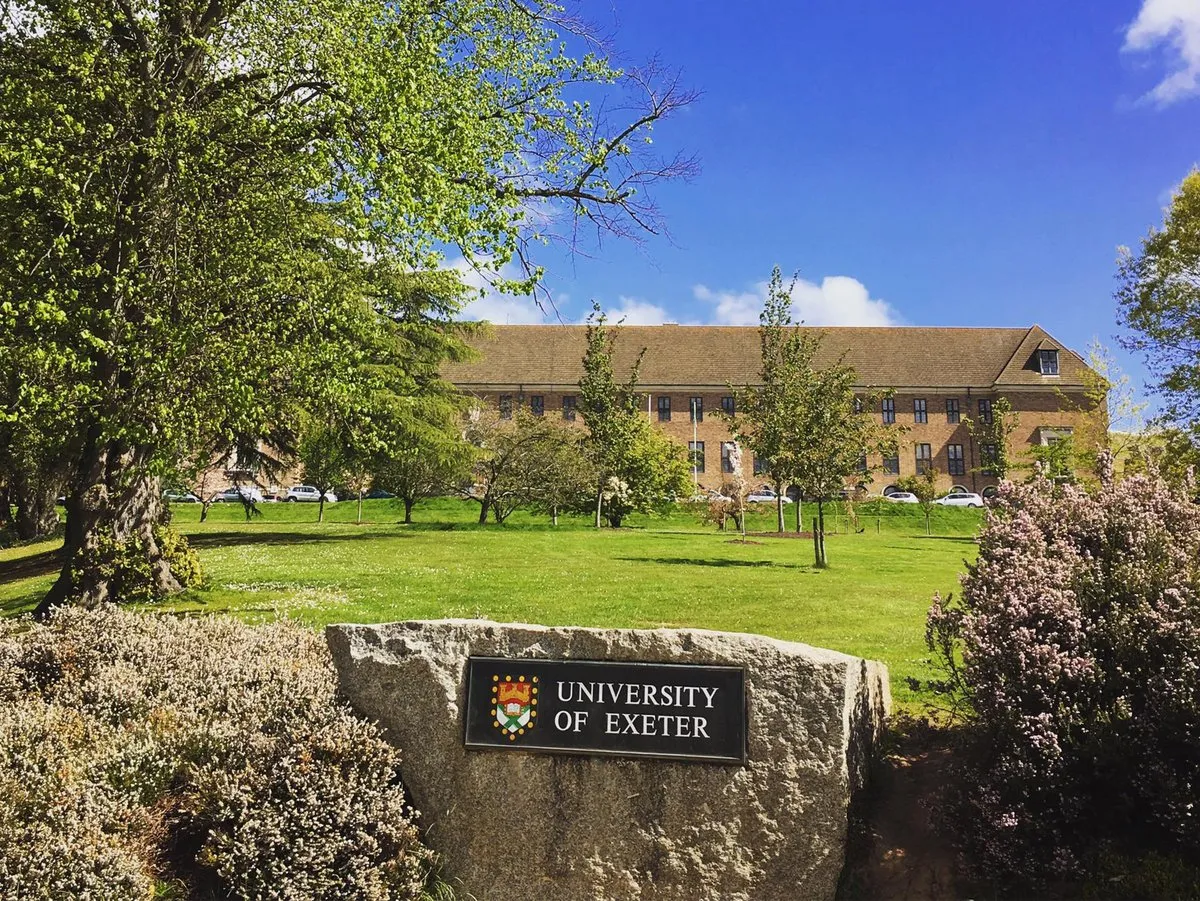 Photo: University of Exeter, via www.esb-business-school.de
"People are hungry for meaningful social connection," she says. "They want to feel useful, to belong to something, to have a shared purpose. Festival volunteering delivers all of those things in a concentrated, time-limited format that suits how modern people live."
The First-Timers
Not everyone is a veteran. Every season brings a wave of first-time volunteers, many of them arriving with a mixture of excitement and anxiety, unsure quite what they've signed up for.
Kieran, 22, from Cardiff, volunteered at his first festival last summer after seeing an advert on social media. He'd never been to a festival before at all. "I was terrified on the first morning," he admits. "I didn't know anyone. I didn't know what I was doing. And then within about three hours I felt completely at home. The team leader was brilliant. The other volunteers were so welcoming. By the end of the first day I'd already decided I was coming back next year."
For many young people, festival volunteering serves as a gentle on-ramp into both festival culture and voluntary work more broadly — an accessible, low-barrier entry point that can lead to lasting habits of civic participation. Several festival organisations have formalised this, creating structured programmes that link volunteering experience to employability skills, mental health support, and community engagement.
Kafeel, who runs volunteer coordination for a mid-sized arts festival in the East Midlands, has seen the transformative impact firsthand. "We've had people come to us who are isolated, who are struggling, who just need to feel part of something. And the festival gives them that. Some of them have gone on to set up their own community events. The ripple effects are extraordinary."
The Labour of Love
It would be dishonest to romanticise it entirely. Festival volunteering can be physically demanding, occasionally thankless, and sometimes genuinely difficult. Managing crowds in the rain, dealing with medical emergencies, handling aggressive or distressed attendees — these are not comfortable experiences. The gap between what volunteers are asked to do and what they're formally trained for is a legitimate concern that responsible organisations are increasingly addressing through better induction, clearer role definitions, and improved welfare provision for the volunteers themselves.
Beverley, back on the gate in Somerset, is clear-eyed about this. "There are hard moments," she says. "There have been years when I've driven home exhausted and thought: never again. And then I get the email in November asking if I want to return, and I sign up before I've finished reading it."
That's the thing about this particular kind of giving. It asks a lot, and it gives back more.
Britain's festival culture is rightly celebrated for its music, its art, its community spirit, its sheer glorious improbability. But underneath all of that, holding it up, making it possible — there is this: tens of thousands of ordinary people who decided that the best way to spend their weekend was in service of something larger than themselves.
The show goes on because they show up. That's worth saying out loud.