Miles Before the Music: The Great British Festival Road Trip and Why It Stays With You
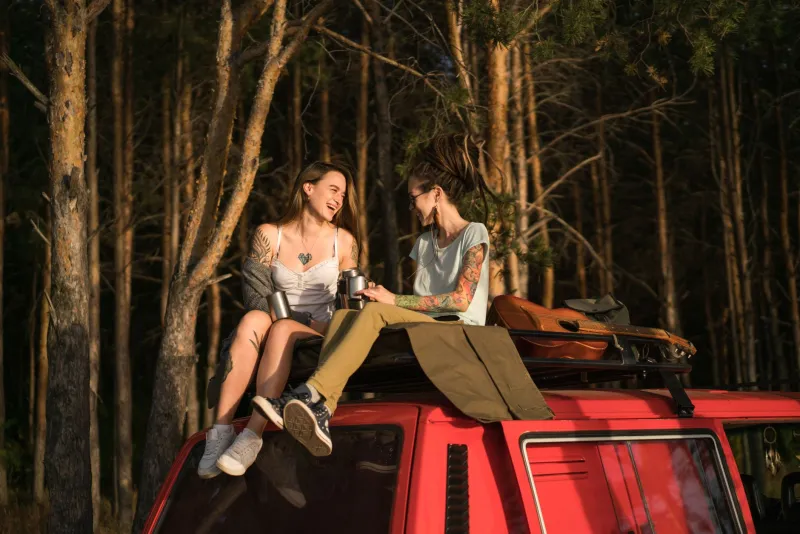
It's half past midnight on a Thursday, and somewhere on the M5, a Ford Focus is doing sixty-three miles per hour with four people in it who haven't slept. The boot is so full that someone's sleeping bag is wedged between the driver's headrest and the ceiling. There's a half-eaten bag of Haribo on the dashboard, a disagreement about whether the next song should be Fleetwood Mac or Stormzy, and an atmosphere of barely-contained excitement that no amount of motorway services coffee can fully account for.
This is Britain at its best. Unglamorous, slightly chaotic, and completely alive.
The Journey as the Destination
Festival culture in Britain has always been about more than the music. The camping, the mud, the communal meals cooked on single-ring gas stoves — all of it forms part of a ritual that goes well beyond whatever's happening on the stage. But there's one element of that ritual that rarely gets the attention it deserves: the getting there.
The festival road trip is its own distinct experience, with its own rhythms and traditions and moments of unexpected grace. It begins days before departure — the group chats about who's bringing what, the arguments about packing light versus packing sensibly, the discovery that someone has forgotten the mallet for the tent pegs and nobody else brought a spare. It builds through the loading of the car, that particular Tetris game of rucksacks and roll mats and cases of beer. And it reaches its first peak somewhere around the second hour of driving, when the playlist has finally been settled and everyone's accepted that the journey is going to take longer than Google Maps suggested.
"There's this moment," says Priya Nair, a 29-year-old graphic designer from Manchester who has made the road trip to festivals in Somerset, Suffolk, and the Scottish Highlands over the past decade, "where the conversation stops being about logistics and starts being about everything else. You're trapped together. You can't go anywhere. And somehow that becomes this incredible space where you talk about things you'd never bring up at home."
Friendships Forged at Sixty Miles Per Hour
There's a particular intimacy to a long car journey that no other social situation quite replicates. You're physically close, you're temporarily cut off from your normal environment, and the shared purpose — getting somewhere together — creates a low-level sense of solidarity that loosens people up in ways that are hard to manufacture.
For many British festival-goers, the road trip is where group dynamics get established, where new friendships deepen, and where older ones get tested and reaffirmed. The friend who navigates brilliantly under pressure. The one who produces a thermos of proper tea from somewhere in their rucksack at exactly the right moment. The one who falls asleep before Birmingham and misses the entire second playlist. These small revelations accumulate into something that feels, in retrospect, as significant as anything that happens once you arrive.
"I've been going to festivals with the same group for twelve years," says Dan Osei, a 35-year-old teacher from Bristol. "The road trips are honestly as important as the weekends themselves. We've had proper heart-to-hearts in the car. We've laughed until someone had to pull over. We've sat in complete silence for an hour because the music was too good to talk over. Those hours are part of the story."
The Mythology of the Borrowed Tent
No festival road trip is complete without some element of improvisation. The borrowed tent — slightly too small, with a zip that sticks on the left side, lent by a cousin who may or may not have lost one of the poles — has become almost a cultural symbol in its own right. It represents the spirit of making do, of adventure over comfort, that sits at the heart of British festival culture.
There's something quietly radical about choosing to sleep in a field with inadequate shelter when you could, theoretically, have just stayed home. It's a choice that says something about what you value — experience over convenience, community over comfort, the unpredictable over the safe.
The borrowed tent also creates dependency. You are, for the duration of the weekend, reliant on someone else's generosity, someone else's kit. That vulnerability has a way of bringing people together.
Motorway Services as Sacred Space
Ask anyone about their festival road trip memories and, alongside the music and the friendships, they will almost always mention the motorway services. The 2am stop at Gloucester Services. The breakfast at Tebay on the way home, exhausted and muddy and somehow still not ready for it to be over. These liminal spaces — neither home nor festival, neither arrival nor departure — become part of the journey's texture in a way that's oddly moving.
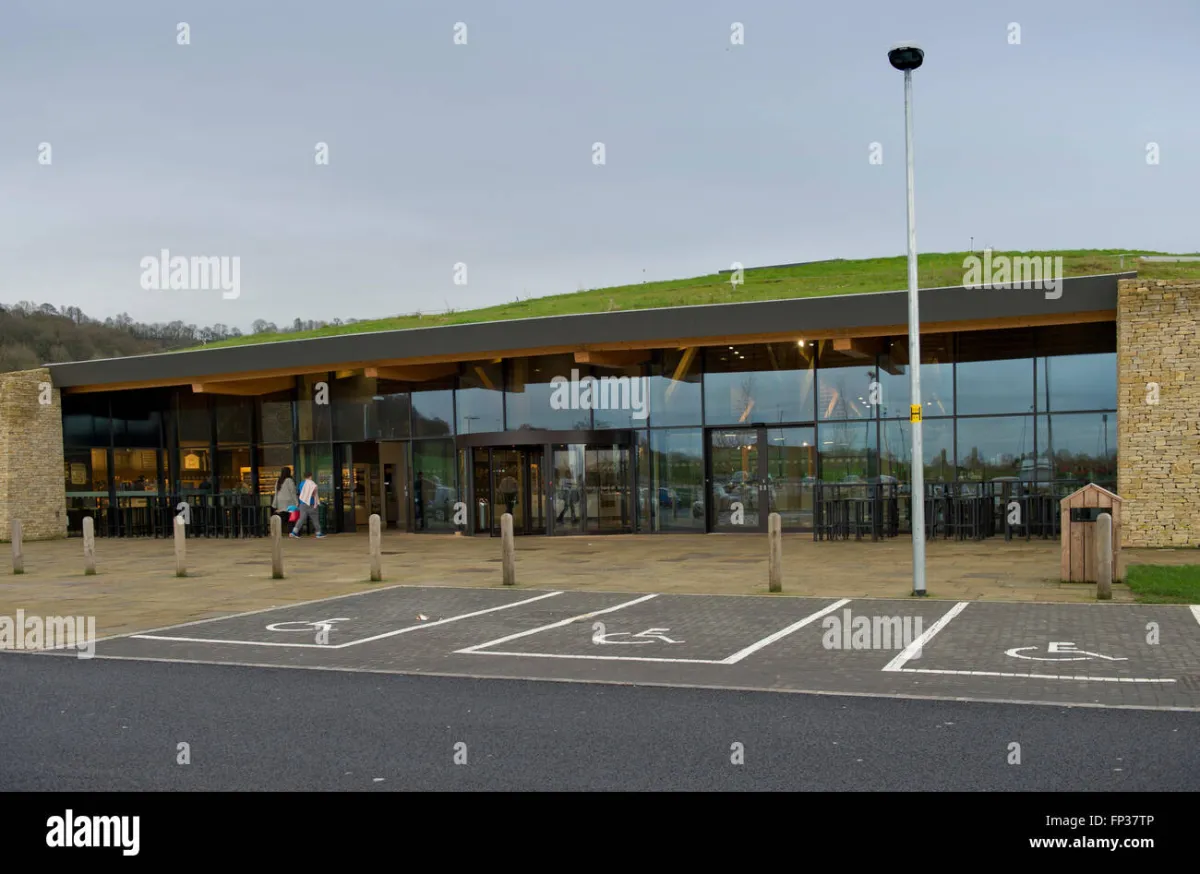 Photo: Gloucester Services, via c8.alamy.com
"We always stop at the same services on the way back," says Priya. "It's become this ritual. We sit there with our coffees and nobody wants to say it's over. We're still in it, kind of. Still in the bubble. The motorway services is like the decompression chamber between the festival world and the real one."
Why We Keep Making the Trip
Britain is not a large country. You can drive from one end to the other in half a day. And yet the festival road trip persists as a beloved ritual — chosen over trains and coaches and car shares — because the journey itself is part of what people are going for.
The music matters enormously. But so does the conversation at midnight on the M5, the argument about the playlist, the moment someone spots the first signs for the festival site and the car erupts in noise. These are the memories that last longest, because they're not just about the music — they're about the people you made the journey with.
From now on, maybe that's the real measure of a great festival: not just what happens on the stages, but what happens in the miles before you get there.