Mud, Magic, and a Long-Haul Flight: Why the World Keeps Coming to Britain for Its Festival Fix
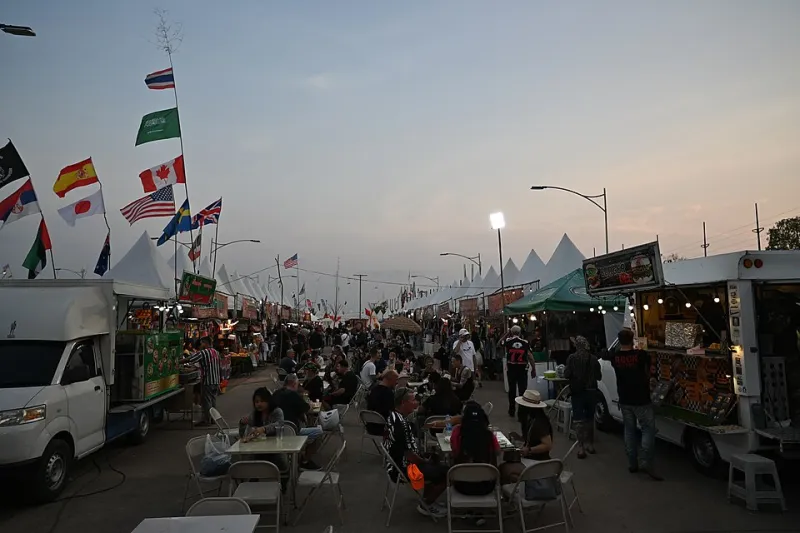
Photo: PattayaPatrol, CC BY-SA 4.0, via Wikimedia Commons
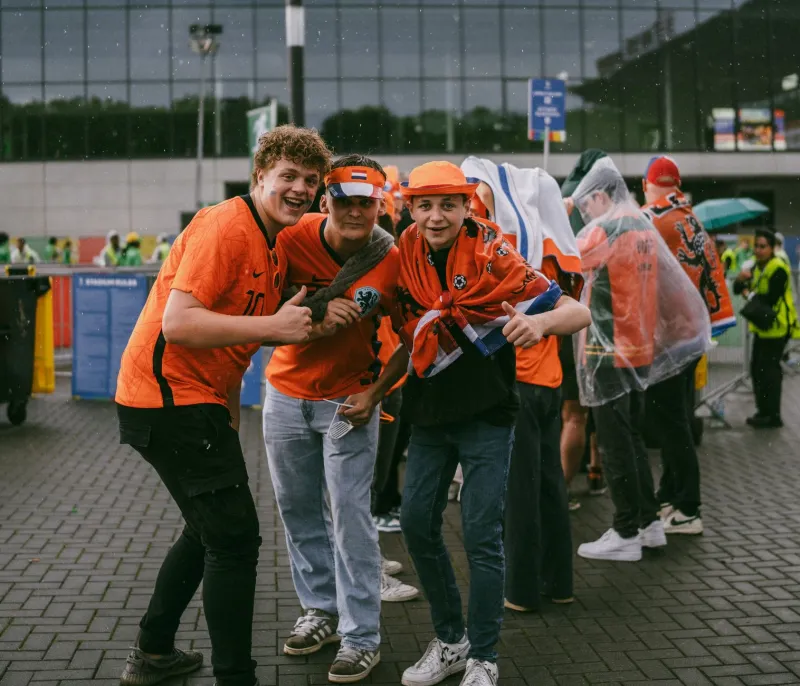
Elena flew in from Toronto. Pieter drove up from Amsterdam. Yuki took a connecting flight from Tokyo via Frankfurt. They don't know each other, but they ended up in roughly the same place: a field somewhere in Somerset or Suffolk or the Scottish Highlands, wearing identical expressions of slightly damp, wholly delighted disbelief.
They are part of a growing — and largely under-discussed — phenomenon in British cultural tourism. International festival-goers who travel specifically, deliberately, and repeatedly to experience the UK's summer festival season. Not as an add-on to a broader British holiday, but as the destination in itself.
The festival is the point.
A Phenomenon With Deep Roots
Britain's festival culture has always had a certain international mystique. Glastonbury, the event that looms largest in the global imagination, has attracted overseas visitors for decades — drawn by its mythology as much as its lineup. But what's changed in recent years is the broadening of the international audience beyond the headline events, and the emergence of festival tourism as a genuine, repeat-visit behaviour.
People aren't just coming once, ticking a bucket list box, and moving on. They're coming back. Building their holidays around the British festival calendar. Developing fierce loyalties to specific events, specific fields, specific communities.
"This will be my sixth time at the same festival," says Elena, a 38-year-old graphic designer from Toronto who first attended a mid-sized UK arts and music festival seven years ago on what was supposed to be a one-off European trip. "I've stopped trying to explain it to people at home. They think it's eccentric. But there's something here that I genuinely cannot replicate anywhere else, and I've tried."
What They're Actually Looking For
Ask international festival visitors what draws them to Britain specifically, and the answers are more nuanced than you might expect. The music, of course, plays a role — the UK's artist roster and the breadth of the festival programme are genuine global draws. But the music alone doesn't explain why someone flies from Japan for a festival they could, in theory, experience through a livestream.
What keeps coming up, across conversations with overseas visitors at events around the country, is something harder to commodify: the particular social texture of the British festival.
"In Japan, public events have a certain formality," says Yuki, a 31-year-old teacher from Osaka attending a UK festival for the third time. "Here, there is a kind of... permission to be ridiculous. To be yourself. I saw a man in a full dinosaur costume queuing for a cup of tea and nobody looked twice. That sounds like a small thing. It isn't."
Pieter, a 44-year-old architect from Amsterdam who has attended festivals across Europe, is more specific about what distinguishes the British experience. "The improvisation," he says. "British festivals feel genuinely alive to me in a way that some more produced European events don't. When it rains — and it always rains — nobody leaves. They adapt. They get more enthusiastic. There's a spirit of collective stubbornness that I find completely wonderful."
The rain, it turns out, comes up a lot. Not as a deterrent, but as something approaching a selling point.
The Bucket List and Beyond
Glastonbury remains the gravitational centre of international festival tourism in Britain — its name recognition is simply unmatched. But a closer look at the itineraries of serious international festival visitors reveals a much richer geography.
End of the Road in Dorset attracts a devoted following of American and European indie music fans who value its intimate scale and curatorial intelligence. Green Man in the Brecon Beacons has built a strong international reputation among those who want the festival experience embedded in genuinely spectacular landscape. TRNSMT in Glasgow draws visitors from across Europe who combine it with a wider Scottish adventure. Latitude in Suffolk, Bluedot in Cheshire, Boomtown Fair in Hampshire — each has its own international community of returning visitors.
"I've done six different UK festivals now," says Elena. "Each one has its own personality. That's what I keep telling people who think it's all the same thing. It really isn't. Britain has managed to create an ecosystem where you can have a completely different experience depending on which field you're standing in."
The Community That Forms Across Borders
One of the more unexpected outcomes of international festival tourism is the cross-border community it generates. Online groups connecting overseas visitors to UK festivals have thousands of members — people sharing logistics tips, accommodation recommendations, set time predictions, and the kind of enthusiastic pre-event speculation that is, itself, part of the ritual.
"I've made friends through these groups who I now meet at UK festivals every year," says Pieter. "There's a Brazilian couple, an Australian woman, a German guy who travels to three or four UK festivals each summer. We wouldn't know each other without this. The festival is the thing that connected us, but the friendship is real."
This is, in microcosm, exactly what festivals are supposed to do — create conditions for connection that wouldn't otherwise exist. The fact that it's happening across continents as well as across postcodes says something significant about the reach of British festival culture as a global social form.
What It Says About Britain
There's a broader cultural story here worth sitting with. At a moment when British identity is contested and complex, the festival is one of the things the world still looks at and wants. Not the heritage tourism version of Britain, not the brand-managed version — but the muddy, improvisational, stubbornly communal version.
The version where strangers share tent pegs and argue cheerfully about whether the headliner deserved the slot. Where the weather is terrible and nobody really minds. Where the experience of being together in a field is, somehow, enough.
For international visitors making the annual pilgrimage, that version of Britain is the one worth crossing an ocean for. And from where we're standing — wellies on, sky looking threatening, heart already full — we're very glad they keep making the trip.