Shoebox Archaeology: What Britain's Festival Keepsakes Tell Us About Ourselves
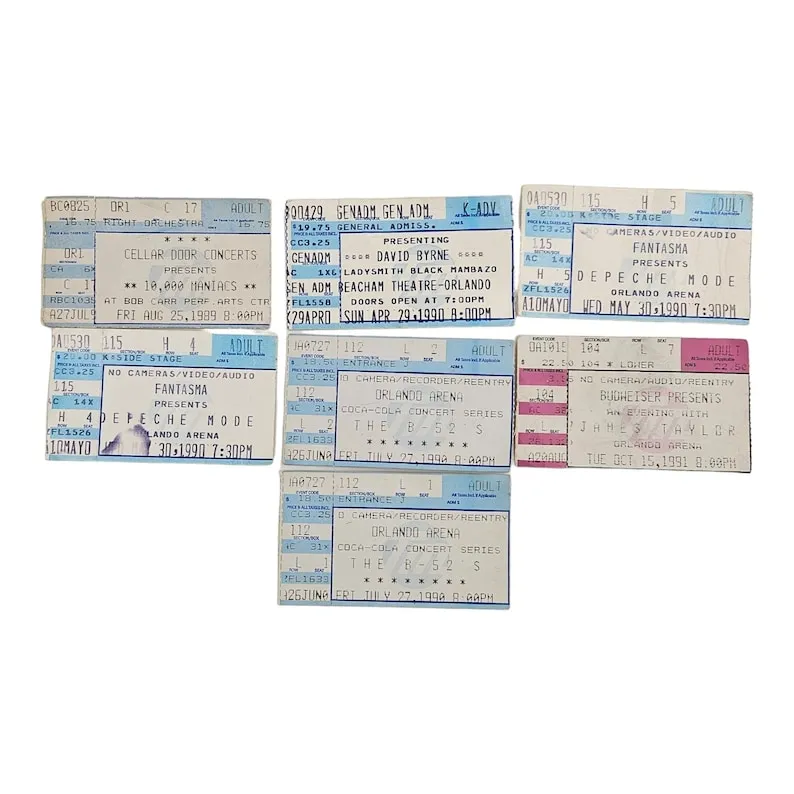
Photo: vintage festival programme wristbands ticket stubs collection nostalgia UK, via i.etsystatic.com
Shoebox Archaeology: What Britain's Festival Keepsakes Tell Us About Ourselves
Somewhere in a loft in Bristol, there's a biscuit tin containing a 1995 Glastonbury programme, a neon orange wristband that's faded to the colour of old bone, and a photograph of four teenagers grinning in front of a hand-painted stage banner. None of them planned to keep any of it. And yet here it is — three decades on — quietly outlasting careers, relationships, and at least two house moves.
Britain's festival-goers are, without meaning to be, among our finest historians.
The Archive Nobody Commissioned
Museums spend millions reconstructing cultural moments. Academics pore over census data and newspaper archives. But some of the most revealing records of how British society has shifted over the past fifty years are sitting in carrier bags under beds and in cardboard boxes at the back of wardrobes.
Festival ephemera — programmes, wristbands, ticket stubs, backstage passes, hand-drawn site maps, promotional flyers — carries an intimacy that formal archives rarely capture. These objects weren't preserved for posterity. They were shoved in a pocket, forgotten about, and rediscovered years later with a jolt of something that feels like time travel.
"What strikes me every time is how much these things communicate beyond the obvious," says Harriet Bloom, an archivist at a regional heritage centre in the West Midlands who has spent the last four years cataloguing donated festival material. "You look at a 1983 programme and you're not just seeing who played. You're seeing the typography, the language, the political adverts tucked alongside the stage times. You're seeing what people cared about."
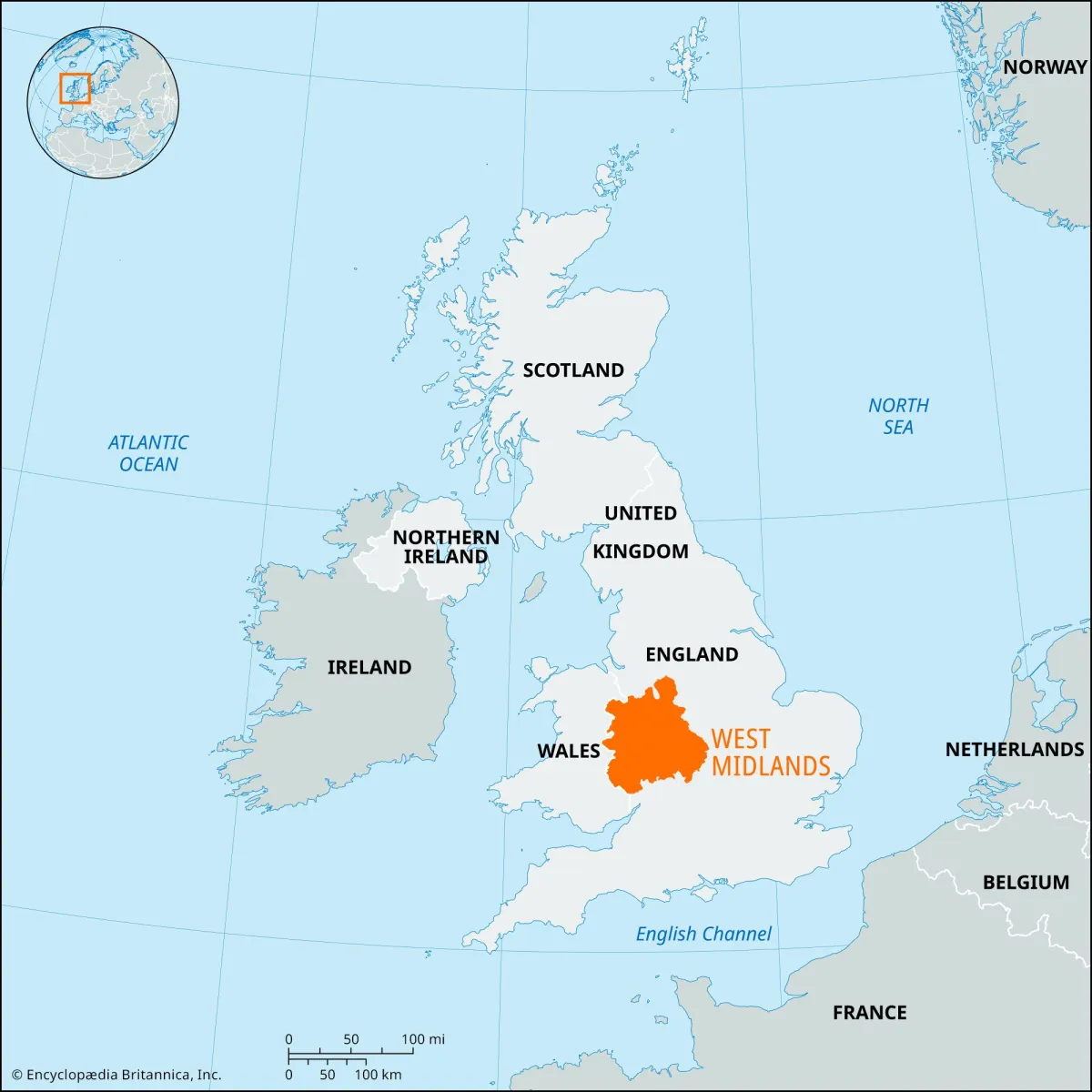 Photo: West Midlands, via cdn.britannica.com
And what they cared about has changed — sometimes subtly, sometimes seismically.
Reading the Room Through the Programme
Flick through festival programmes from the late 1970s and early 1980s and you'll find a particular flavour of British optimism: hand-lettered fonts, earnest manifestos about community and peace, adverts for wholefood co-operatives and CND meetings. The language is utopian, occasionally chaotic, and unmistakably of its moment.
By the 1990s, the aesthetic has shifted. Programmes thicken. Sponsorship logos creep in. The fonts go glossy. There's a sense of festivals becoming something more professionalised — more product, less pilgrimage. And yet the personal annotations that festival-goers scrawled across those pages — circled acts, arguments about set times, phone numbers written in biro — speak to something stubbornly human persisting underneath the commercialisation.
The 2000s brought another transformation: the rise of the boutique event. Smaller, more curated, more self-consciously designed. Programmes from this era often look like art objects in themselves — letterpress printed, beautifully illustrated, clearly made to be kept. "There's a real awareness in the design," notes Bloom. "Like the organisers knew people would save them. That changes the relationship between the object and the moment."
What the Photographs Don't Show
Private photography collections tell their own parallel story — one that cuts across the official record entirely.
Before smartphones, festival photographs were expensive, finite, and loaded with intention. You had twenty-four exposures on a disposable camera. You chose carefully. The resulting images tend to be portraits — faces, groups, moments of connection rather than stages and crowds. There's a warmth to them that feels almost radical by contemporary standards.
As digital photography arrived and then exploded into the era of the front-facing camera, the nature of festival images shifted fundamentally. More images, more documentation, less selectivity. The crowd shot became as common as the portrait. The festival became something to be witnessed and broadcast simultaneously.
This isn't a lament — it's an observation. Both traditions carry value. But laid side by side, those analogue prints and their digital descendants trace something real about how British people's relationship with public experience and private memory has evolved.
The Things We Keep Without Knowing Why
Ask anyone who has held onto festival mementos why they kept them and the answers are surprisingly consistent: I don't know, really. I just couldn't throw it away.
That instinct matters. It suggests these objects are doing emotional work that we haven't fully articulated — holding a version of ourselves that we want to stay in contact with. The wristband from the year you turned eighteen. The programme from the festival you went to two weeks after your dad died. The ticket stub from the night you met your best friend.
Festival ephemera carries biography in a way that few other objects do. It marks time, yes — but it also marks becoming. The person who kept that 1995 programme wasn't just recording a weekend. They were recording a version of themselves that no longer exists, and in doing so, preserving something irreplaceable.
Looking Forward in the Rear-View Mirror
What's particularly striking about Britain's festival archive — formal and informal alike — is what it suggests about where we're heading.
The growing number of regional museums and heritage projects now actively collecting festival material signals a cultural reckoning. We are beginning to take seriously the idea that popular culture's ephemeral traces are worth preserving — not as nostalgia, but as evidence. Evidence of values, of community, of what brought people together and why.
From Now On, there's an argument to be made that every festival should think about its own archive from the moment it begins. Not just the poster art or the professional photography, but the unofficial stuff — the handmade signs, the lost-and-found notes, the messages scrawled on the back of site maps.
Because the most honest record of who Britain is at any given moment isn't in the headlines or the history books. It's in a biscuit tin in a Bristol loft, waiting to be opened.