Gloves On, Heads Down: The Volunteer Army Who Love Festivals Enough to Stay When Everyone Else Goes Home
The Monday morning after a major UK festival is one of the strangest silences in British cultural life. Where 60,000 people once danced, argued about set times, and queued for overpriced oat milk lattes, there is suddenly just... field. Flattened grass. Forgotten wellies. The occasional abandoned inflatable flamingo.
But the site isn't empty. Not quite yet.
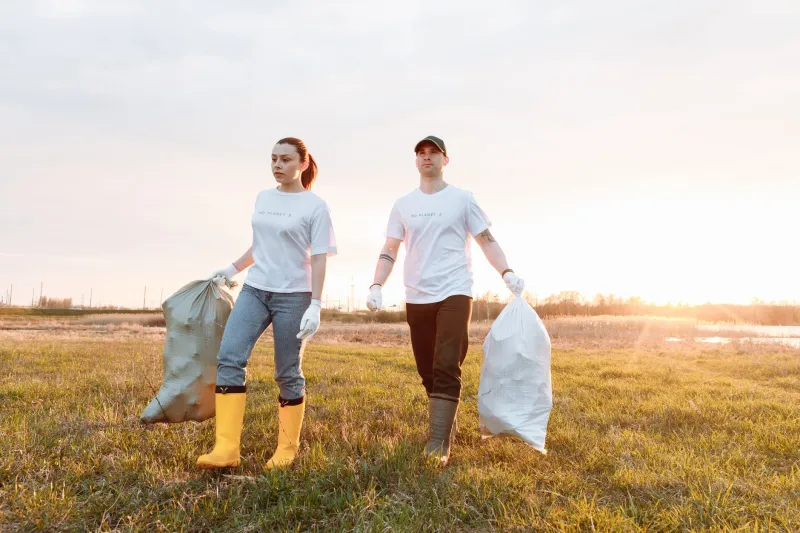
Dotted across the grounds, high-vis jackets catching the weak morning light, are the volunteers. The ones who didn't leave on Sunday night. The ones who, in many ways, are only just getting started.
The Shift Nobody Talks About
Festival volunteering gets a certain kind of coverage. The bar shifts, the wristband scanning, the recycling stations during the weekend itself — these roles are reasonably well documented, and the appeal is obvious. You get access to the event in exchange for a few hours of work. Fair deal.
But the post-event volunteer shift is a different creature entirely. There's no music. No crowd energy. No chance of catching a surprise set from the second stage. There is, however, an enormous amount of work.
Stages need to come down. Thousands of metres of temporary fencing must be removed and stacked. The litter — and there is always an almost incomprehensible quantity of litter — needs to be collected, sorted, and where possible, separated for recycling. Portable toilets are emptied and removed. Generator cables are coiled. The whole elaborate, magnificent temporary city that took weeks to build gets dismantled in a matter of days.
And the people doing much of that work are volunteers who actively chose to be there.
"I've done the litter pick shift four years running now," says Priya, a 34-year-old secondary school teacher from Bristol who volunteers each summer at a mid-sized festival in the West Country. "My friends think I'm absolutely mental. They've already gone home, showered, and got back to normal life by the time I'm still out there with a bin bag. But honestly? Those days after are some of my favourite days of the whole year."
 Photo: West Country, via www.worldatlas.com
Why Stay?
It's a fair question. What motivates someone to swap a warm duvet for another few nights in a muddy field, this time without any of the entertainment that made the mud worthwhile?
The answers, when you start collecting them, are surprisingly consistent — and surprisingly moving.
For many post-event volunteers, it's about the community that forms in those quiet hours. Stripped of the noise and spectacle, the people left behind tend to talk more. Really talk. The shared absurdity of the task — two strangers picking up someone else's crisp packets at 7am while a light drizzle sets in — creates an unlikely intimacy.
"You end up knowing people properly by the end of it," says Marcus, a 28-year-old from Leeds who has volunteered at the same festival's breakdown crew for three consecutive years. "During the weekend, everyone's kind of in their own bubble, chasing their own experience. Afterwards, it's just us. There's something really grounding about that. You make actual mates."
There's also a strong thread of environmental conscience running through the volunteer community. The UK festival scene has made significant strides on sustainability in recent years — reusable cup schemes, composting programmes, bans on single-use plastics — but the reality is that even the greenest festival generates waste. The volunteers who stay to sort it take that responsibility seriously.
"I care about this stuff," says Kezia, a 22-year-old environmental science student who spent five days on a recycling sort line after her first festival. "If I'm going to enjoy something that has an environmental footprint, I want to be part of making it right. It felt more meaningful than just going home and feeling vaguely guilty about it."
The Rhythm of the Work
There's a physical poetry to the breakdown process that takes a while to appreciate but is, once you see it, genuinely compelling. The festival site runs in reverse. What went up in a particular order must come down in reverse sequence. Rigging before scaffolding. Scaffolding before fencing. Fencing before ground restoration.
For volunteers embedded in this process, days develop their own rhythm. Early mornings in the litter-pick lines, moving slowly across the field in a long human sweep. Mid-morning tea breaks that feel disproportionately satisfying. Afternoons hauling, stacking, sorting. The particular satisfaction of watching a section of ground that was, hours ago, a chaos of plastic and paper become clean again.
"It's meditative, in a weird way," says Priya. "You're not thinking about anything else. You're just doing the thing in front of you. After a full-on festival weekend, that's actually what I need."
Why They Come Back
Perhaps the most striking thing about post-event festival volunteers is the return rate. Festivals that run structured volunteer programmes consistently report that their breakdown crew is disproportionately made up of returning faces. People who did it once and, despite the early mornings and the aching backs and the industrial quantities of other people's litter, found themselves signing up again the following year.
Organisers notice this. "Our breakdown volunteers are often our most loyal community members," says one festival operations manager, who has worked on large-scale UK events for over a decade. "They've seen the site at its most raw. They understand what goes into it. They feel a genuine ownership over the thing."
That sense of ownership matters. It's the difference between attending a festival and belonging to one. And in a cultural moment when belonging feels increasingly precious and increasingly hard to find, it turns out that one of the most reliable routes to it involves a pair of rubber gloves and an early start.
From Now On has always believed that festival culture is about more than the headline acts. It's about the people who make it real, in every sense. The volunteers who stay when the music stops aren't missing the point of the festival. In many ways, they've found it.
Next time you're packing up your tent on Sunday afternoon, spare a thought for the ones who aren't. They'll be there for a while yet — and they wouldn't have it any other way.